


Event Marketing for Live Entertainment: The Complete Guide for Promoters
Event marketing for ticketed shows, step by step: forecast demand before you announce, run each phase show by show, split a tour budget by the gap each date has to close, and measure against real ticket sales. Includes patterns by format and a checklist.


Event marketing means two different things, depending on who you ask. This guide clears that up in one paragraph, then focuses on the version promoters deal with every day: marketing a ticketed live event so that it sells. You get a phase-by-phase framework, a channel map, a rule for splitting budget across the shows of a tour, a way to measure results against real ticket sales, practical patterns for each format and a checklist for your next on-sale.
Key takeaways
- In live entertainment, event marketing means selling tickets to the event itself, measured by tickets sold and marketing cost per ticket before doors open.
- Run the campaign in four phases: before the announce, announce and on-sale, mid-campaign and final push, with a 72-hour review against forecast.
- Sell to warm audiences first: past buyers, then buyers of similar shows, registrants and followers, and only then lookalikes and broad targeting.
- Split a tour budget by each show's gap (tickets to produce × allowable marketing cost per ticket) and keep a fifth to a quarter in reserve.
- Measure against verified ticket sales from your ticketing system, not platform-reported purchases, and reallocate budget every week based on actuals versus forecast.
What is event marketing? Two meanings, one focus
In the brand world, event marketing (often called experiential marketing) means a company using events to market itself: a product launch, a trade fair stand, a roadshow, a sponsored stage at a festival. The event is the channel, and success is measured in leads, awareness or brand lift. In live entertainment it works the other way around: the event is the product, and marketing exists to sell tickets to it. Concerts, festivals, theatre runs, touring family shows and comedy all live here, and the success metric is unforgiving: tickets sold, at what price, at what marketing cost per ticket, before the doors open. The rest of this guide is about that second meaning.
Five facts set live event marketing apart from marketing almost any other product:
- Fixed inventory. Every show has its own capacity.
- A hard deadline. There is no "next quarter".
- Perishable stock. An empty seat on show night is worth zero, forever.
- Demand varies by show. The same artist sells differently in two cities, or on a Tuesday versus a Saturday.
- Social buying. One person often buys for a group, and the decision depends on friends saying yes.
Every decision in a good event marketing strategy follows from those five facts.
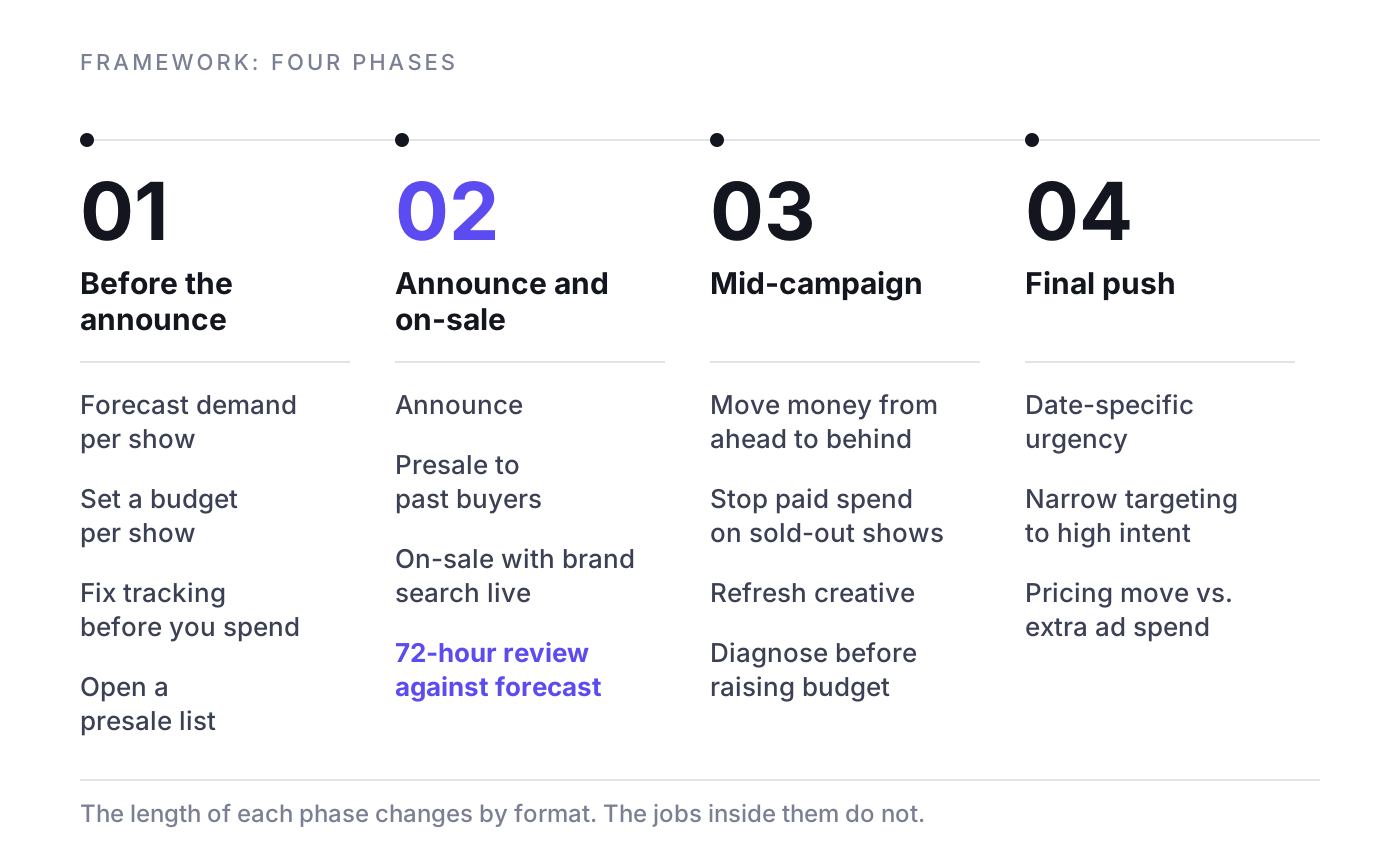
The event marketing strategy in four phases
How long each phase lasts depends on the format. The jobs within each phase stay the same.
Phase 1: Before the announce
- Forecast demand per show. Use past sales for this artist or format in each city, venue capacity, pre-registrations, streaming and social signals, and competing events on the same dates. The output is an expected sell-through range per show, not one number for the tour. The method is covered in detail in demand forecasting for live events.
- Define the audience. Write down who buys first (core fans, past buyers) and who buys late (casual fans, groups, gift buyers). They need different messages at different times.
- Set a budget per show. Start from what you can afford to spend per ticket, then multiply by the number of tickets marketing has to produce. The budget section below shows the formula.
- Get tracking right before you spend. Connect the ticketing system, check pixel and server-side events, agree on UTM conventions and run a test purchase end to end. See Meta Pixel standard events and the ticketing-first data layer.
- Open a presale list. It gives you an early demand signal and a warm audience.
Phase 2: Announce and on-sale
- Announce. Your biggest moment for reach: artist and venue channels, press, email to past buyers and paid reach to warm audiences all go out together to fill the presale list.
- Presale. Past buyers and registrants get first access. These are your cheapest sales.
- On-sale. Make sure brand search campaigns are live, and retarget people who hit the queue but did not buy (see retargeting a queue).
- 72-hour review. The first three days tell you a lot about the shape of demand. Compare actuals to forecast for every show and sort them into ahead, on track and behind. More in the on-sale curve and the first 72 hours.
Phase 3: Mid-campaign
The long quiet middle is where most budget is either wasted or saved.
- Move money from shows that are ahead to shows that are behind but still recoverable.
- Pause paid spend on shows that have sold out or are close to it.
- Refresh creative when frequency climbs and cost per ticket rises. As a rule of thumb, plan a new round every few weeks.
- Give people a reason to buy now: reviews, footage from earlier dates, seating maps, add-ons.
- When a show lags, find the cause before you raise the budget: is it awareness, price, date, venue or creative? The full diagnosis is in what to do when ticket sales are low.
Phase 4: Final push
- For many formats, a significant share of tickets sells in the final weeks. Plan for it rather than panic.
- Switch to date-specific urgency: "last tickets for Friday", "only balcony left".
- Narrow targeting to local, high-intent audiences: site visitors, cart abandoners, past buyers who have not bought this show yet.
- Decide whether a pricing move would do more than extra ad spend. See dynamic pricing as a demand signal.
How to market an event: channels and what each is good for
No single channel sells a show. Each one has a job.
- Email and SMS to past buyers: the cheapest tickets you will sell. Always first, always before the general public.
- Artist, talent and venue channels: reach and credibility. Coordinate posting dates early.
- Meta (Facebook, Instagram): the workhorse for most formats. Broad reach plus precise retargeting. It needs clean event data and the Meta Conversions API to optimize well.
- Google Search: captures demand that already exists (artist name plus "tickets" plus city). Bid on your own brand terms so resellers do not take that traffic, a problem described in secondary market leakage.
- YouTube: for shows that need to be seen to be understood, such as theatre, family shows and spectacle.
- TikTok: discovery for younger audiences, and it works best with native, creator-style clips. Setup basics in the TikTok Ads Manager guide.
- Display and programmatic: local reach and retargeting, weaker for direct sales.
- Out of home, radio, print: local awareness and older audiences, strong for theatre and family shows. Hard to attribute, so compare regions with and without it.
- PR and partnerships: media partners, hotel and travel packages, brand partners with their own audiences.
For a channel-by-channel playbook with timing, read how to promote an event.
Audience: start with the people who already bought
The most common mistake in event marketing is spending on cold audiences before the warm ones are exhausted. Work down this list in order:
- Past buyers of the same artist or show.
- Past buyers of similar shows, the same venue or the same genre.
- Pre-registrants, waitlists and newsletter subscribers.
- Engaged social followers and recent site visitors.
- Lookalikes built from verified buyer lists (not from page likes).
- Broad interest and demographic audiences.
Only use buyer data in line with the consent your ticketing system collected. In Europe, GDPR sets the rules for what you can upload to ad platforms.
Remember the group buyer: give the person buying four tickets what they need to convince their friends (date, price, a clip worth forwarding).
Creative that sells tickets
- Lead with what people pay for: the artist, the moment, the spectacle. Real footage usually beats designed graphics.
- Answer three questions in seconds: what is it, when and where, why buy now.
- Make date and city impossible to miss, and localize it for each show.
- Build variants per phase: announce (it is happening), on-sale (tickets are live), mid-campaign (proof: reviews, footage, fan reactions), final push (last chance, specific dates and price tiers).
- Vertical video first for social, with statics as backup.
More on formats and hooks in creative for live entertainment.
Event marketing budget across the shows of a tour
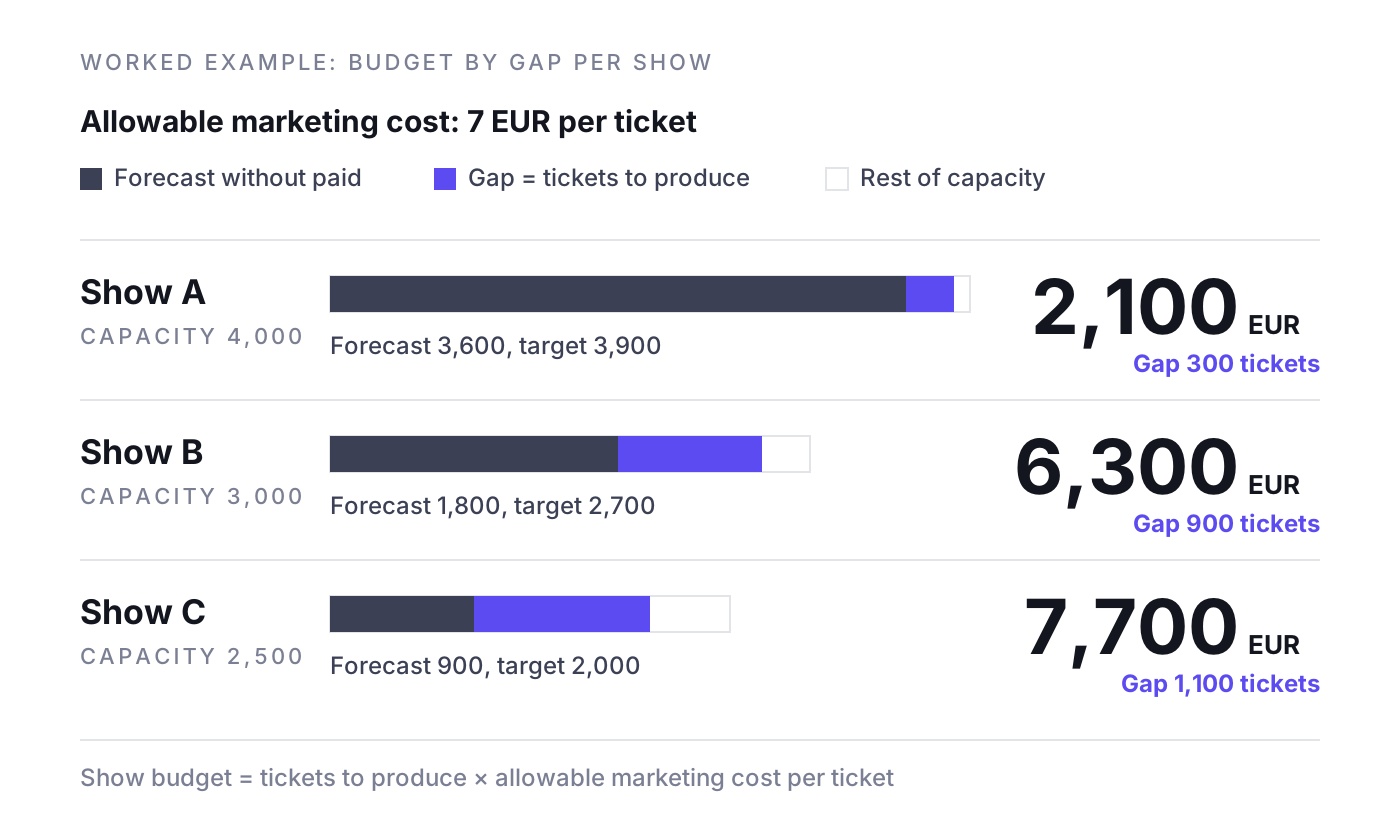
A tour budget split evenly across dates is almost always wrong. Shows differ in capacity, demand and day of the week. Allocate by the gap marketing has to close:
Tickets to produce = (capacity × target sell-through) minus forecast sales without paid media
Show budget = tickets to produce × allowable marketing cost per ticket
Example: three shows with an allowable marketing cost of 7 EUR per ticket.
- Show A: capacity 4,000, target 3,900, forecast without paid 3,600. Gap 300 tickets, budget 2,100 EUR.
- Show B: capacity 3,000, target 2,700, forecast 1,800. Gap 900 tickets, budget 6,300 EUR.
- Show C: capacity 2,500, target 2,000, forecast 900. Gap 1,100 tickets, budget 7,700 EUR.
Show C gets the most money, but it also carries the most risk: the last tickets in a weak market are the most expensive. Check the cost of each additional ticket before you keep pushing (see marginal cost per incremental ticket). For multi-date runs, weekday shows usually need a bigger share, as explained in mid-week dates in multi-date runs.
Two more rules of thumb: hold back an unallocated reserve (often a fifth to a quarter of the total) for the final push and for surprises, and reallocate every week based on actuals versus forecast. Tactics for the shows that still need help are in how to sell more tickets.
Measure event marketing against ticket sales, not platform reports
Every ad platform reports its own purchases, and they overlap. Add up what Meta, Google and TikTok claim and you will often get more tickets than you actually sold. The reasons are explained in marketing attribution for live events.
Use the ticketing system as the source of truth and track the following for each show, every week:
- Tickets sold versus forecast and sell-through percentage.
- Blended marketing cost per ticket: total spend divided by total tickets sold in the period.
- Revenue per marketing euro, based on verified ticket revenue. How to calculate it properly: ROAS for ticket sales.
- Return on the whole event, including fees, production and venue costs: event ROI.
To find out what marketing actually added, run holdout or geo tests. The method is in incrementality testing for ticket sales, and the full KPI set is in ticket sales analytics KPIs.
Event marketing examples by format
These are general patterns, not case studies. Adapt them to your own data.
Concert
For strong artists, demand is front-loaded around the on-sale. Put most of your effort into the announce, the presale to past buyers and on-sale day, retarget the queue, then run a lean middle phase and a final push on the remaining price tiers. The full sequence is in the concert marketing playbook.
Festival
A campaign that runs for many months. Lineup drops become content beats, early-bird tiers create deadlines, and group, camping and payment-plan offers lower the barrier. Do not pin everything on the headliner: sell the experience. More in festival marketing strategy.
Long-running theatre
Always-on rather than a launch. Plan the budget by performance week, give weekday performances extra support, use reviews and audience reactions as creative and build group and tourist sales. See theatre marketing for long-running shows.
Touring family show
Parents decide, often later than concert buyers do, and plan around school holidays and weekends. Weekend matinees tend to sell first, while weekday performances need the push. Video of children reacting to the show does more than any poster, and local media and parent communities matter.
Comedy
Many dates in smaller rooms with small budgets per date. The comedian's own social channels carry most of the load, short clips are the creative, and paid media focuses on tight local targeting. When dates sell out, add shows fast while interest is high.
Event marketing checklist
Before the announce
- Demand forecast per show, as a range
- Target sell-through and allowable cost per ticket per show
- Budget per show plus an unallocated reserve
- Tracking tested with a real test purchase
- Past buyer lists ready, consent checked
- Creative for announce and on-sale approved
Announce and on-sale
- Email and SMS to past buyers before the general public
- Presale live
- Brand search campaigns live
- Queue retargeting set up
- 72-hour review against forecast
Mid-campaign
- Weekly actuals versus forecast, per show
- Budget moved towards recoverable shows
- Creative refreshed
- Lagging shows diagnosed before more spend
Final push and after the show
- Date-specific urgency creative
- Targeting narrowed to high intent
- Pricing reviewed, sold-out shows paused
- Spend reconciled against verified ticket sales
- Lessons recorded by city, venue and format for the next forecast
Where NYBA fits
All of this works with spreadsheets and discipline, until you are running dozens of shows across several channels. NYBA is the Revenue OS for live entertainment. NYBA OS forecasts ticket demand per show, runs campaigns on Meta, Google, TikTok and other paid channels, shifts budget towards the shows that need it and measures everything against verified ticket sales from the ticketing system, not platform-reported purchases. It runs across 1,200+ events per year for 100+ promoters, with 75M+ tickets behind it and clients such as Live Nation, Cirque du Soleil and BBC Earth. An expert layer sits on top of the platform. If you are comparing options, read event marketing software and agency vs revenue platform.
Frequently asked questions
What is event marketing?
For brands, it means using events (launches, trade fairs, sponsorships) to market a company. For promoters, it means marketing a ticketed event so it sells, measured in tickets sold and cost per ticket.
What is the difference between event marketing and experiential marketing?
Experiential marketing is the brand version: the event is a tool to build the brand. In live entertainment, the event itself is the product, and marketing is judged by ticket sales and cost per ticket.
How far in advance should you start marketing an event?
Start planning before the announce, because the forecast, budget and tracking need to be ready on day one. As a rule of thumb, tours and concerts announce several months out, festivals often close to a year out, long-running theatre shows market continuously and comedy works on shorter cycles.
How much should you spend on event marketing?
Work backwards. Use your margin to decide the marketing cost per ticket you can afford, estimate how many tickets marketing has to produce per show beyond organic demand, and multiply. Keep a reserve for the final weeks.
Which channel works best for live event marketing?
Email and SMS to past buyers come first because they are the cheapest. After that, Meta usually does the heavy lifting, Google Search captures existing intent, and TikTok and YouTube add discovery. The right mix depends on the format and the audience.
How do you measure event marketing success?
Against verified ticket sales from your ticketing system, per show and per week. Track sell-through against forecast, blended cost per ticket and revenue per marketing euro, and use incrementality tests to see what marketing really added.
If you want to see this framework running on your own shows, book a demo. One event, clean numbers, then you decide.
Related reading: Concert marketing playbook, Forecasting ticket demand, Digital marketing vs performance marketing, Facebook Ads KPI benchmarks

Was würde 3x mehr
Umsatz für dich bedeuten?
Finde es heraus:
