


Event Marketing Examples: 10 Campaign Playbooks Promoters Can Copy
Ten illustrative event marketing playbooks for real situations, from an arena announce to a rescheduled date. Each gives you the goal, channel mix, a specific creative idea, timing, budget logic, the one metric to watch and the mistake to avoid.


Most lists of event marketing examples are screenshots of famous campaigns you cannot copy: you do not have that artist, that budget or that brand. This article does the opposite. It gives you 10 example playbooks for situations promoters actually face, from an arena announce to a rescheduled date, each with the goal, channel mix, a specific creative idea, timing, budget logic, the one metric to watch and the mistake that usually breaks it.
None of these are case studies. They are illustrative playbooks built from general practice in live entertainment, so swap in your own show, numbers and ticketing data. For the strategy behind them, start with the event marketing guide.
Key takeaways
- These event marketing examples are illustrative playbooks, one per situation, each with a goal, channels, creative, timing, budget logic, one metric and one common mistake.
- Launch campaigns such as an arena announce or a festival early bird are won or lost in the first days, so concentrate budget around presale, on-sale and tier deadlines.
- Long runs and series (theatre, classical seasons, club nights, attractions) need always-on budget planned per performance week or per date.
- Rescue playbooks start with a diagnosis by date and category before any extra spend; a rescheduled date starts with the existing ticket holders.
- Adapt any example by changing four inputs: demand at announce, capacity per date, lead time and who makes the purchase decision.
Event marketing examples: how to read the playbooks
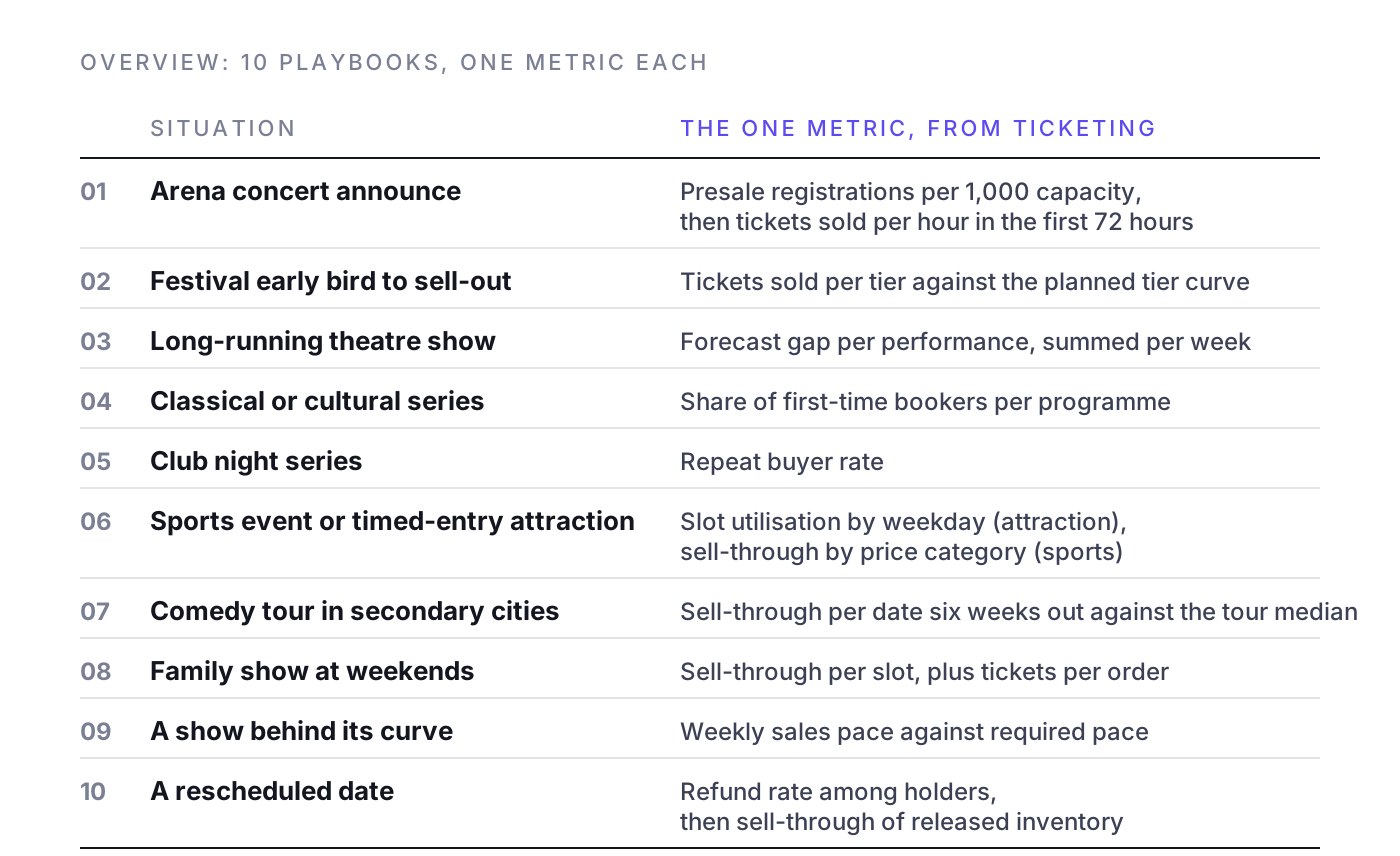
Every example uses the same eight fields, so you can lift parts from one into another. Goals are defined in tickets, not clicks, and the one metric comes from your ticketing system, not an ad platform. Percentages and timeframes are rules of thumb, not benchmarks: replace them with your own history.
Examples of event marketing campaigns for launches
Example playbook 1: arena concert announce
- Situation: an artist with a proven fan base announces one or two arena dates. Demand peaks in the first days, then drops sharply.
- Goal: maximum sell-through in the first 72 hours, and capture everyone who misses the presale.
- Channel mix: email and SMS to past buyers and fan lists, artist and venue social, Meta and TikTok for reach, Google Search on "[artist] [city] tickets", retargeting of queue and ticket-page visitors.
- Creative idea: 6 to 10 seconds of the artist live, city and date on screen, one line: "Presale Wednesday 10:00. Sign up now." On-sale day: same footage, "On sale now". Later: "Seated tickets still available" once standing is gone.
- Timing: announce, two to three days of presale registration, presale, general on-sale, a lean middle, a final push three to four weeks out.
- Budget logic: front-load. Rule of thumb: the largest share of paid media goes into the stretch from announce to on-sale week, with a reserve for remaining categories.
- One metric: presale registrations per 1,000 capacity, then tickets sold per hour in the first 72 hours.
- Common mistake: spending on a category that has already sold out. Ads still saying "tickets on sale" pay for frustrated clicks and push fans to resale sites.
Read more about the on-sale curve in the first 72 hours and retargeting a queue.
Example playbook 2: festival early bird to sell-out
- Situation: a multi-day festival with tiered pricing, a lineup released in waves and many months of selling.
- Goal: sell the early-bird allocation fast, then hold a steady curve to sell-out without discounting.
- Channel mix: email to last year's attendees, Meta and TikTok around each lineup wave, artist and creator shares, brand search, always-on retargeting.
- Creative idea: for the early bird, last year's aftermovie cut to 15 seconds, no lineup, and "Tier 1 at early-bird price. Ends Sunday." Each lineup wave gets one asset per headliner plus the full poster. The late phase sells the experience: camping, sunrise sets, payment plans, group tickets.
- Timing: early bird right after the previous edition, lineup waves every three to six weeks, price steps announced 48 hours ahead.
- Budget logic: bursts around each beat (tier deadline, lineup wave), quiet in between, with retargeting ticking over at a low level.
- One metric: tickets sold per tier against your planned tier curve, especially before each price step.
- Common mistake: putting everything on the headliner reveal and having nothing to say for three months afterwards. See festival marketing strategy.
Event promotion examples for long runs and series
Example playbook 3: long-running theatre show
- Situation: a musical or play with eight performances a week, running for many months.
- Goal: fill weak performances, usually midweek evenings and some matinees, without discounting the strong ones.
- Channel mix: always-on Meta and Google Search, online video for awareness, email to past bookers, group and tourism sales, press.
- Creative idea: the best 20 seconds of the show plus one real audience quote. For midweek: "Tuesday to Thursday: the best seats are still available", with the date picker visible.
- Timing: plan per performance week, four to eight weeks ahead; holiday weeks months ahead.
- Budget logic: budget per week weighted by forecast gap. Weeks expected to fill get a maintenance level, weeks with a gap get more.
- One metric: forecast gap per performance (seats you expect to stay unsold), summed per week.
- Common mistake: the same daily budget for the whole run, so Saturday evening gets as much as the Tuesday that needs it. More in theatre marketing for long-running shows.
Example playbook 4: classical or cultural series
- Situation: a season of 8 to 12 concerts or talks, an older core audience, some programmes far easier to sell than others.
- Goal: renew subscribers, sell the harder programmes and bring in first-time bookers.
- Channel mix: email and print to subscribers, Google Search, Meta with interest and lookalike audiences, partnerships with other cultural institutions.
- Creative idea: core audience: programme, soloist, date, clear seating map. Newcomers: "What you will hear in 90 minutes", 15 seconds of the music, starting price, running time, "no dress code".
- Timing: renewals before the season, single tickets per programme six to ten weeks out, reminders in the last two weeks.
- Budget logic: allocate per programme by difficulty. Familiar repertoire needs little paid media, unfamiliar repertoire most of it.
- One metric: share of first-time bookers per programme.
- Common mistake: one brand campaign for the whole season, so the hardest programmes get the same push as the easy ones. See arts marketing.
Example playbook 5: club night series
- Situation: a monthly night in a 500 to 1,500 capacity club with rotating guest DJs.
- Goal: make the series sell itself instead of starting from zero every night, and build repeat buyers.
- Channel mix: Instagram and TikTok, DJ shares, a WhatsApp or SMS list, Meta retargeting of past buyers and their lookalikes.
- Creative idea: vertical crowd footage from the last edition (filmed with consent), then "Next edition: [date]. Tier 1 goes to the list first." The guest lineup is a separate post.
- Timing: announce the next date at the end of the current night and in the email the morning after; list first, public sale a week later.
- Budget logic: small and steady, mostly on past buyers; prospecting only when the repeat rate drops.
- One metric: repeat buyer rate, the share of tickets bought by people who attended before.
- Common mistake: leaning on the guest DJ's name every time instead of building the night itself into the brand.
Example playbook 6: sports event or timed-entry attraction
- Situation: a one-off sports event, or an exhibition with timed entry that is open for months.
- Goal: event: sell out before the day. Attraction: keep time slots full and shift demand to weak days.
- Channel mix: a large share on Google Search ("[attraction] tickets", "things to do in [city]"), Meta and TikTok for reach, hotels and tourism partners, email.
- Creative idea: attraction: 10 seconds of first-person walkthrough footage, "Book your time slot. Weekday mornings are quieter." Sports: the stakes in one line ("The final. One night only.") plus the view from each price category.
- Timing: the attraction is always-on, with extra weight before holidays and on rainy weekends. The sports event follows the announce and on-sale.
- Budget logic: attraction budget follows slot availability: pull it from full days, push it to days with open slots.
- One metric: slot utilisation by weekday (attraction), sell-through by price category (sports).
- Common mistake: selling only to tourists and forgetting locals, or the reverse.
Event marketing ideas for specific audiences
Example playbook 7: comedy tour in secondary cities
- Situation: 25 dates, mostly 400 to 1,200 seat rooms in mid-sized cities, a small budget per date.
- Goal: sell every date out and spot early where a second show would work.
- Channel mix: the comedian's own social, with ads run from their handle; Meta and TikTok with a tight local radius; local radio or press; email to past buyers per region.
- Creative idea: a 20 to 40 second clip of a bit that works without context, ending on "[City], [Venue], [Date]."
- Timing: announce the whole tour at once, then a local push per city six to eight weeks out and in the final ten days.
- Budget logic: base budget per date proportional to capacity, plus a central reserve for dates that are behind. Sold-out dates go to zero until a second show is added.
- One metric: sell-through per date six weeks out against the tour median.
- Common mistake: identical budget per city. Strong cities do not need it, weak ones need more. More in tour marketing.
Example playbook 8: family show at weekends
- Situation: a touring family show with several weekend performances per city, sensitive to school holidays.
- Goal: fill weekend morning and afternoon slots, then the weaker Friday and late Sunday performances.
- Channel mix: Meta targeting parents within a set radius, local parent groups and newsletters, Google Search ("things to do with kids this weekend [city]"), schools and nurseries.
- Creative idea: children watching and reacting, not the stage alone. On screen: running time, age range, "Saturday 11:00 and 14:00".
- Timing: parents decide late. Concentrate spend two to three weeks out and early in show week; holiday dates start earlier.
- Budget logic: rule of thumb: hold back a larger share for the final three weeks than you would for a concert.
- One metric: sell-through per slot, plus tickets per order as a check that you are reaching whole families.
- Common mistake: targeting the child's interests instead of the parent who pays, and spending months out, before parents have started planning.
Rescue playbooks: when a show needs help
Example playbook 9: a show that is behind its curve
- Situation: eight weeks out, a date sits well below where comparable shows were at the same point.
- Goal: close the gap at a cost per incremental ticket that still makes sense.
- Channel mix: depends on the diagnosis. Few page visits: reach problem (prospecting, past buyers of similar shows). Visitors who do not buy: conversion problem (price, seat map, checkout). One empty category: category problem.
- Creative idea: change the angle, not just the budget. If the announce video showed the artist, test the experience, a review or a reason to buy now.
- Timing: act at eight weeks out, not two.
- Budget logic: derive a ceiling for cost per incremental ticket from your margin. Example: with a margin of €25 per ticket, spend that buys extra tickets at €30 each loses money on every one.
- One metric: weekly sales pace against required pace (tickets needed divided by weeks remaining).
- Common mistake: discounting first. It teaches buyers to wait and annoys everyone who paid full price.
The full diagnosis is in low ticket sales: what to do, the ceiling in marginal cost per incremental ticket.
Example playbook 10: a rescheduled date
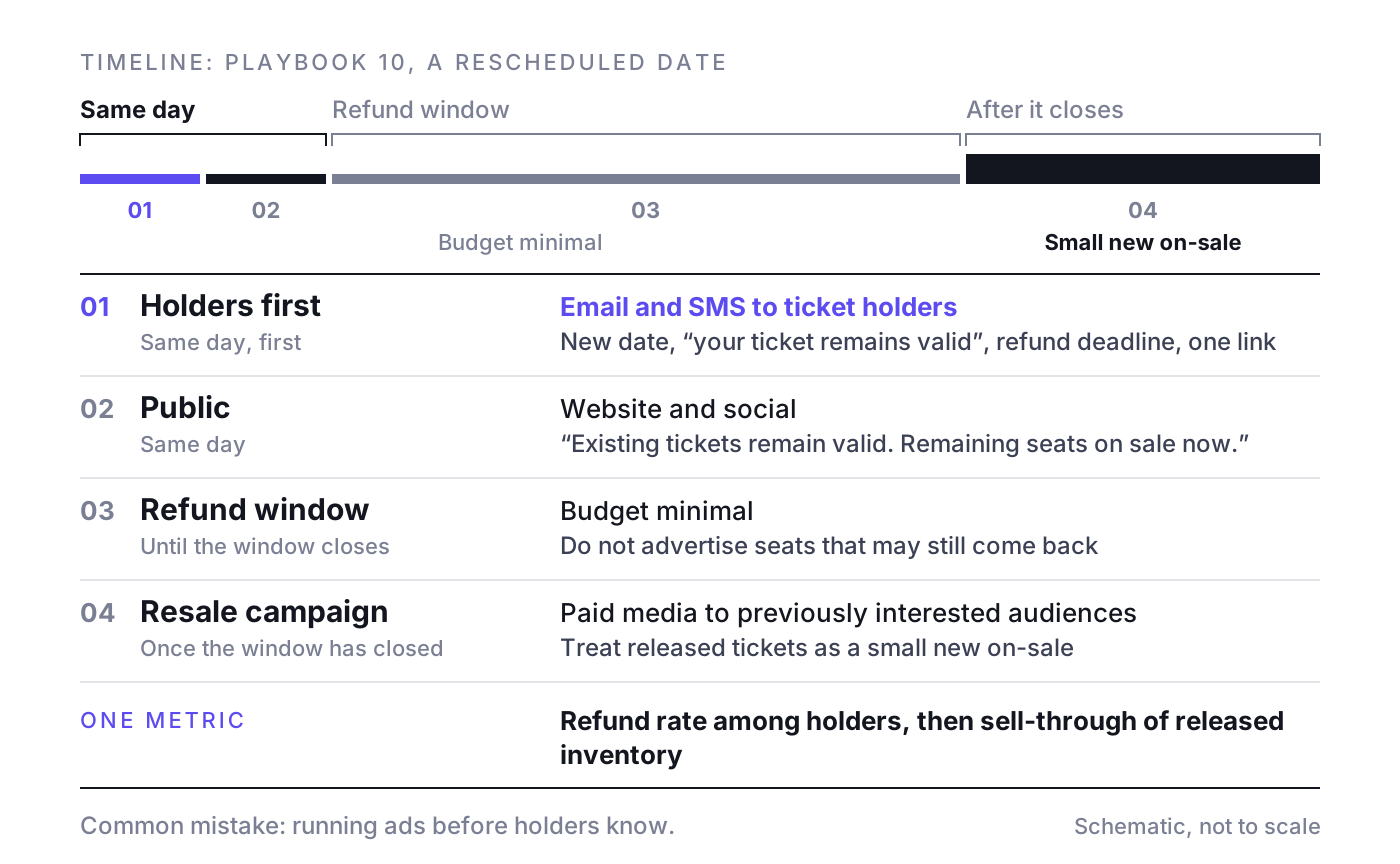
- Situation: a date moves because of illness, a venue issue or a production problem. Tickets stay valid and a refund window opens.
- Goal: keep existing buyers, then resell the inventory that comes back.
- Channel mix: email and SMS to ticket holders first, then website and social, then paid media to audiences who have shown interest before.
- Creative idea: a message to holders with the new date, "your ticket remains valid", refund deadline, one link. Public: "New date: [date]. Existing tickets remain valid. Remaining seats on sale now."
- Timing: holders first, public the same day, resale campaign once the refund window closes.
- Budget logic: minimal until the refund window closes, then treat released tickets as a small new on-sale.
- One metric: refund rate among holders, then sell-through of released inventory.
- Common mistake: running ads before holders have been told, or advertising seats that may still come back.
How to adapt any example to your show
Change these four inputs and the rest follows:
- Demand at announce. High demand means front-loading (playbooks 1 and 2). Low or unknown demand means a steadier build with more testing (3, 4 and 7).
- Capacity per date. Small rooms sell on organic reach and lists; large capacities need paid reach and a reserve for the final weeks.
- Lead time. Fewer weeks to sell means fewer tests and more weight on past buyers and search.
- Who decides. Fans decide fast, parents and groups late, tourists close to their travel dates. Time everything around the decision maker.
Then fill in the eight fields for your show on one page, pick the one metric before launch and agree in advance what you will do if it misses. For fresh creative angles, see creative for live entertainment.
Where NYBA fits
Every playbook above depends on two things: knowing early which dates are behind, and moving budget to them based on real ticket sales. NYBA OS, the Revenue OS for live entertainment, forecasts ticket demand per show, runs campaigns on Meta, Google, TikTok and other paid channels, shifts budget toward the shows that need it and measures everything against verified ticket sales from the ticketing system, not platform-reported purchases. It runs 1,200+ events per year for 100+ promoters, including Live Nation, Cirque du Soleil and BBC Earth.
Frequently asked questions
Are these event marketing examples real campaigns?
No. They are illustrative playbooks built from general practice, not case studies of specific brands or artists. Use them as templates with your own numbers.
What are good event marketing ideas on a small budget?
Start with people who already bought: email, SMS and retargeting of past buyers. Use the performer's own channels, run ads from their handle and save paid prospecting for dates that are behind.
Which metric should I watch for an event campaign?
One from the ticketing system that tells you early whether you are on track: tickets per hour after on-sale, sell-through per date against plan, or weekly pace against required pace.
How early should I start promoting an event?
High-demand concerts are front-loaded around the on-sale, festivals sell over many months, family and local shows sell late. Act on a show that is behind at eight weeks, not two.
Want these playbooks running per show and per date, with budget moving to the dates that need it? Book a demo. One event, clean numbers, then you decide.
Related reading: Concert marketing playbook, Mid-week dates in multi-date runs, Ticket sales analytics and KPIs, Demand forecasting for live events

Was würde 3x mehr
Umsatz für dich bedeuten?
Finde es heraus:
