


Tour Marketing: How to Sell Out Every Date, Not Just the Big Cities
A tour is a portfolio of shows, not one campaign. This guide shows how to forecast every date against comparables, split budget by the gap to target, run local and national channels and reallocate weekly, with a worked 12-date example.


Most tour marketing fails in the same quiet way. The capital cities sell out in a week, and six weeks later a Tuesday in a smaller city sits at half capacity with most of the budget already spent. The headline dates never needed the help; the weak dates got it too late. This guide treats a tour as a set of separate shows, each with its own demand, and covers routing, announce strategy, budget per date, channels, creative and the weekly rhythm that keeps every date on track.
It's written for promoters, tour producers and marketing leads, and you can do all of it with a spreadsheet, your ad accounts and a daily ticketing export.
Key takeaways
- Good tour marketing treats every date as its own show, with its own forecast, gap to target, budget and success measure.
- Forecast each date against comparables, then allocate budget by the gap between forecast and target, not by city size or an even split.
- Keep roughly a fifth of the paid budget unallocated and move it every week to the dates where an extra ticket is cheapest.
- Run national assets (artist channels, fan club presale, press) once for the whole tour and local channels (venue lists, local media, geo-targeted ads) per date.
- Judge every date on ticketing data: tickets sold against forecast and cost per incremental ticket, never summed platform-reported purchases.
Tour marketing starts with one shift: a tour is a portfolio of shows
A tour feels like one product: one artist, one key visual, one announce, one budget line. But the buyer in Leipzig does not care that Berlin sold out. Each date has its own capacity, local demand, competition, weekday and cost per ticket. Run the tour as one campaign and the money chases the easiest conversions, and those sit in the dates that would have sold anyway.
Think like a portfolio manager instead:
- Every date has a target (a capacity percentage or a revenue figure), a forecast and a gap between the two.
- Every date gets a budget derived from that gap, not from population or prestige.
- The tour is a success when the weakest dates hit target, not when the strongest ones sell out faster.
Single-show fundamentals still apply; they are covered in the concert marketing playbook and the broader event marketing guide. On a tour, how you split the budget between dates becomes your most important marketing decision.
Routing and announce strategy: one big announce or staggered?
Marketing rarely controls routing, but it should have a say before dates are confirmed. Three routing questions decide how hard the marketing job will be later:
- Day of week. Friday and Saturday dates in big cities often sell themselves. Sunday to Thursday dates, especially in smaller markets, need a plan from day one.
- Distance between dates. Two cities an hour apart share an audience. Unless you split the targeting radius cleanly, one date will cannibalise the other.
- Competition. Check what else is on sale in each city that week, including festivals within driving distance, before a date is locked.
One announce for the whole tour
The default for established acts: one press moment, maximum fan attention, one artist post with all dates and a clean fan club presale. The downside is that weak dates get lost in a list of twelve. Plan the second wave on day one: city-specific posts and ads for every date that is not moving after 72 hours.
Staggered announces
Announcing in waves (anchor cities first, smaller markets two to four weeks later) gives each wave its own news moment. It works when demand is uncertain (you test the anchor cities before committing more dates) or the audience is concentrated in a few places. The risk: fans in later cities buy for an earlier date and travel, or wait.
Added dates
"Second show added due to demand" is the strongest message a tour has, but only when the first show is genuinely close to selling out. Adding a date where the first sits at 70% leaves you with two half-full rooms.
Read each date's on-sale curve against comparables
Before the announce, build a forecast for each date. For each city, pull comparables: the act's last show there, similar acts at the same or a similar venue, the same weekday and season. Note tickets sold after one week, at the midpoint and at doors. That gives you an expected curve for each date, which is far more useful than a single target number. The method is explained step by step in demand forecasting for live events.
Once tickets are on sale, compare each date's actual curve with its comparables:
- Ahead of comparables: the date probably needs maintenance spend only. Do not add budget just because it is "performing well".
- On curve: hold the plan and check again next week.
- Behind comparables: the date needs a plan now, while there are still weeks to fix it. A date that is clearly behind after week one rarely catches up on its own.
Keep one sheet with a row per date: capacity, target, forecast at doors at the current pace, and the gap. Update it weekly. Everything that follows runs off this sheet. The first three days after on-sale give you the strongest early signal you will get; how to read them is covered in the on-sale curve and the first 72 hours.
Multi-city tour budget: allocate by gap, not by city size
The most common budget mistake on tours is splitting money evenly, or in proportion to city size. Both put the most money where it is least needed: a big city selling ahead of its comparables needs reminders and retargeting, not more ads. The money belongs where the gap between forecast and target sits, as long as closing that gap costs less than the tickets are worth.
A simple allocation method:
- Hold back around 15 to 20% of the paid budget as a reserve that stays unallocated at the start (a rule of thumb, not a law).
- Give every date a small maintenance budget for retargeting, reminders and the final-week push, including the strong dates.
- Split the rest across the dates that have a gap, in proportion to the size of each gap.
- Check each date against a ceiling: if the expected cost per incremental ticket is higher than the margin a ticket earns you, more ads will not fix that date. Look at price tiers, room configuration, local partners or bundles instead.
Worked example: a 12-date tour
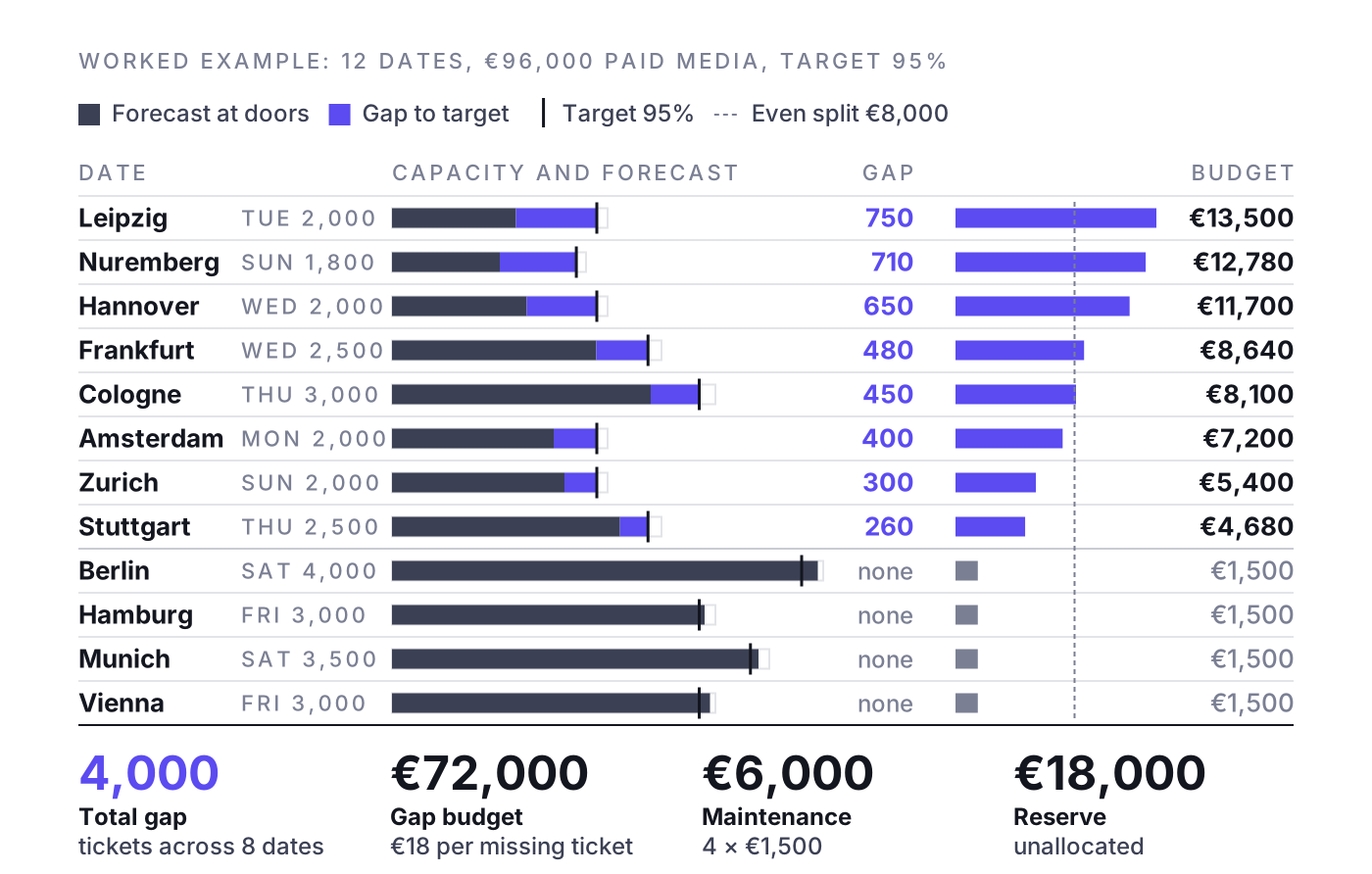
Example (illustrative numbers, not client data): a 12-date tour with a paid media budget of €96,000 and a target of 95% capacity on every date. One week after on-sale, the comparables-based forecast at doors looks like this:
- Berlin (Sat, 4,000 capacity): forecast 3,950, target 3,800, no gap
- Hamburg (Fri, 3,000): forecast 2,900, target 2,850, no gap
- Munich (Sat, 3,500): forecast 3,400, target 3,325, no gap
- Vienna (Fri, 3,000): forecast 2,950, target 2,850, no gap
- Cologne (Thu, 3,000): forecast 2,400, gap 450
- Frankfurt (Wed, 2,500): forecast 1,895, gap 480
- Zurich (Sun, 2,000): forecast 1,600, gap 300
- Amsterdam (Mon, 2,000): forecast 1,500, gap 400
- Stuttgart (Thu, 2,500): forecast 2,115, gap 260
- Leipzig (Tue, 2,000): forecast 1,150, gap 750
- Hannover (Wed, 2,000): forecast 1,250, gap 650
- Nuremberg (Sun, 1,800): forecast 1,000, gap 710
The total gap is 4,000 tickets across eight dates. The allocation:
- Reserve: €18,000, unallocated.
- Maintenance: €1,500 each for Berlin, Hamburg, Munich and Vienna, €6,000 in total.
- Gap budget: €72,000 across the eight gap dates, which is €18 per missing ticket: Leipzig €13,500, Nuremberg €12,780, Hannover €11,700, Frankfurt €8,640, Cologne €8,100, Amsterdam €7,200, Zurich €5,400, Stuttgart €4,680.
Compare that with an even split of €8,000 per date. Berlin, Hamburg, Munich and Vienna would receive €32,000 they do not need, while Leipzig and Nuremberg would get less than two thirds of what their gaps call for.
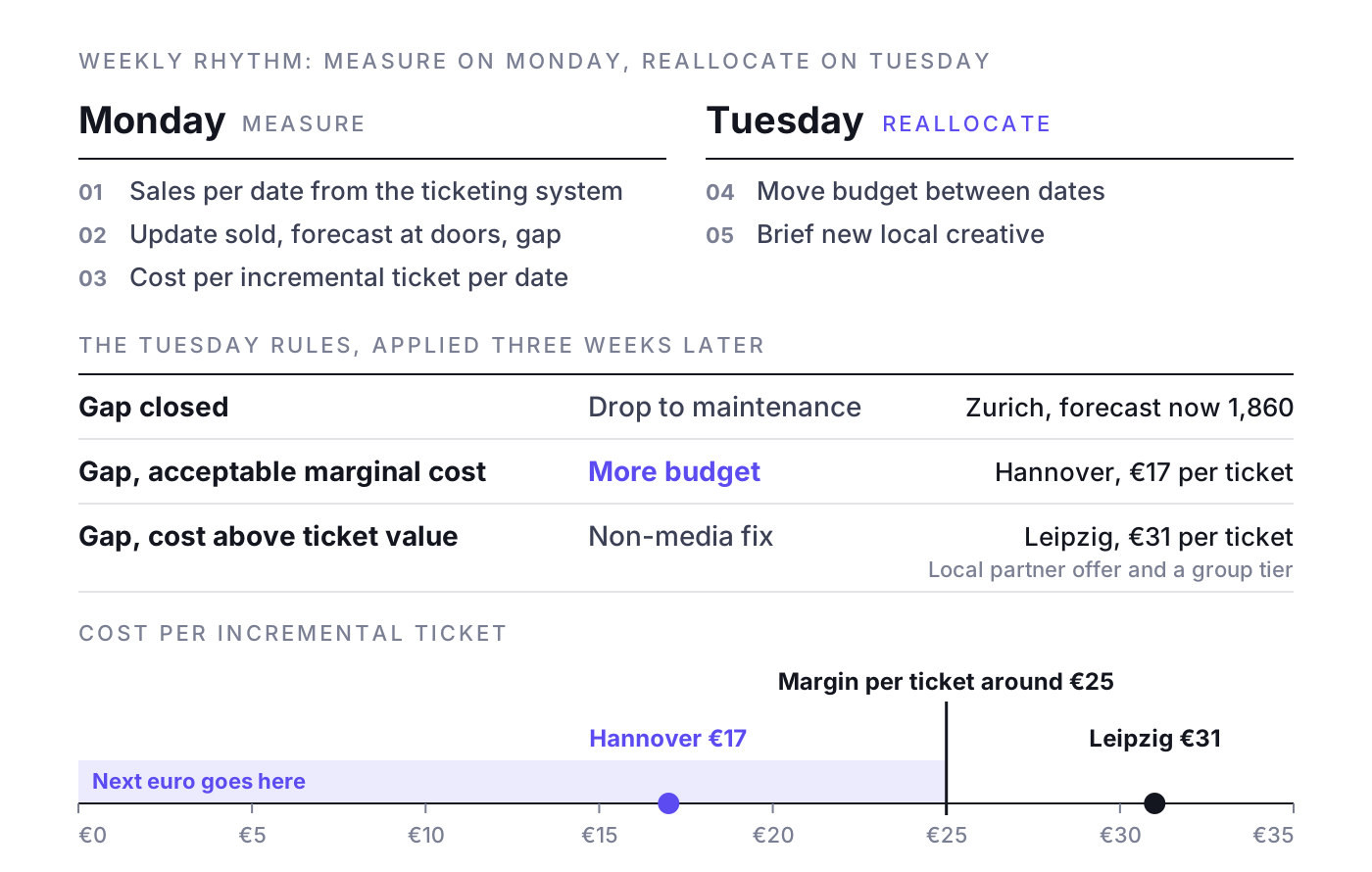
Three weeks later the picture has changed. Zurich picked up after a local radio partnership (forecast now 1,860), so it drops to maintenance and its unspent gap budget returns to the reserve. Leipzig is closing its gap, but its cost per incremental ticket has climbed to €31, while Hannover's sits at €17. If each ticket contributes around €25 in margin in this example, the next euro goes to Hannover, and Leipzig gets a different fix: a local partner offer and a group tier. That is the real point of a multi-city tour budget. The plan at announce is a starting position; the weekly reallocation is the strategy.
How to promote a tour: national assets and local channels
Concert tour marketing runs on two layers. Some work happens once for the whole tour; the rest has to be done date by date. Mixing them up wastes reach on one side and effort on the other.
National layer: once for the whole tour
- Artist channels. The announce post, the tour trailer and an "on sale now" post with all dates. Agree a posting plan with management early, including city-specific posts for weak dates later.
- Fan club and artist presale. The strongest early demand signal you have. Track presale numbers per date: a date that barely moves in presale needs attention before the general on-sale.
- National press, radio and streaming that lift awareness in every market at once.
Local layer: per date
- Venue assets. Newsletter, website listing, social channels, in-house screens and posters. Ask each venue early what it can offer; some venues have stronger lists in their city than the act does.
- Promoter and ticketing lists. Past buyers of similar shows in that city are where your cheapest tickets come from.
- Local media and partners. City magazines, local radio, student unions, employers and clubs for group offers.
- Geo-targeted paid ads per date. Separate campaigns, or at least separate ad sets, per date so you can see and steer spend by date. One tour-wide campaign optimised for purchases will spend where purchases are easiest, which means the strong dates.
Presales and fan clubs across dates
Alongside the artist presale, run promoter and venue presales per date for your own past buyers. Issue codes per source and per date so you can see which lists actually buy. If a date sells out in presale, cut its paid spend immediately and move the planned budget into the reserve.
Creative per city, mid-week dates and secondary markets
Creative per city
Tour creative usually starts as one asset with twelve dates on it. That works for the announce. After that, every weak date needs its own version: city name, venue, day and date large enough to read on a phone, and a reason to buy now. "Leipzig, Tuesday 14 April" in the first second of a video gives a local buyer far more to act on than a list where Leipzig comes ninth.
- Build templates with variable city, venue, date and ticket status ("last 200 tickets", "extra date added") so local versions take minutes, not days.
- Rotate the message as the date approaches: announce, social proof, urgency, final days.
Mid-week dates
Tuesdays and Wednesdays need more lead time, stronger group and after-work offers and earlier warning signs. The full playbook is in mid-week dates in multi-date runs.
Secondary markets
Smaller cities often have less competition and a loyal audience, but also smaller lists, fewer local media outlets and a wider catchment area. Widen the targeting radius to include surrounding towns, mention travel time or parking where it helps, and lean harder on venue and local partner channels. Also check that people searching for the show find the official ticket link before any resale listing.
Tour promotion on a weekly rhythm: measure every date against ticketing data
Without a fixed rhythm, a tour plan slips into autopilot by week three. A simple routine:
- Monday: pull sales per date from the ticketing system (not from ad platforms) and update the forecast sheet: sold, forecast at doors, gap.
- Monday: calculate last week's cost per incremental ticket per date: spend divided by the tickets sold above the baseline you would have expected without that spend.
- Tuesday: reallocate. Dates that closed their gap drop to maintenance. Dates with a gap and an acceptable marginal cost get more. Dates with a gap and a marginal cost above ticket value get a non-media fix.
- Tuesday: brief new local creative for the dates that need it.
What to measure per date
- Tickets sold against forecast and target, from the ticketing system.
- Spend and cost per incremental ticket per date.
- What not to do: add up platform-reported purchases from Meta, Google and TikTok. Each platform claims the same buyer, so the totals look healthy while individual dates fall short.
Where NYBA fits
On one tour the weekly rhythm is manageable by hand; across several tours with daily budget moves it becomes a full-time job. NYBA is the Revenue OS for live entertainment. NYBA OS forecasts ticket demand per show, runs campaigns on every channel that sells tickets (Meta, Google, TikTok and other paid channels), shifts budget toward the shows that need it and measures everything against verified ticket sales from the ticketing system instead of platform-reported purchases. It has been used for 75M+ tickets across 1,200+ events per year and 100+ promoters, including Live Nation, Cirque du Soleil and BBC Earth, with an expert layer on top of the platform.
Frequently asked questions
What is tour marketing?
Tour marketing is the promotion of a series of shows by one act across several cities. Each date gets its own forecast, budget and campaign, tied together by tour-wide assets such as the announce, artist channels and fan presales.
How much budget should each tour date get?
There is no fixed share. Start from the gap between forecast and target per date, give strong dates maintenance spend only, keep a reserve and move money every week to the dates where an incremental ticket is cheapest.
Should I announce all tour dates at once?
For established acts with broad demand, usually yes, with city-specific follow-up for slow dates planned from day one. Staggered announces make sense when demand is uncertain or the audience is concentrated in a few cities.
When should tour promotion start?
At the announce, with presale registration so you can read demand per date early. Per-date campaigns should start as soon as the first on-sale curves show which dates are behind.
What do I do with a tour date that is not selling?
Switch to local creative, use venue and partner channels and check the radius. If an incremental ticket costs more than it is worth, fix the price, offers or room configuration rather than adding more ads.
If you want to see every date of your next tour forecast and budgeted by its gap, book a demo. One tour, clean numbers per date, then you decide.
Related reading: the concert marketing playbook, demand forecasting for live events, mid-week dates in multi-date runs, marginal cost per incremental ticket

Was würde 3x mehr
Umsatz für dich bedeuten?
Finde es heraus:
