


Arts Marketing: How Theatres, Concert Halls and Museums Win More Audiences
A practical guide to arts marketing for theatres, concert halls and museums: audience development, using your own booking data, season versus single-show campaigns, fair discounts, partnerships, measuring capacity utilization per date and a 90-day plan for small budgets.


Arts marketing has a harder job than most marketing: it has to fill seats without treating the art like a clearance sale. Theatres, concert halls, opera houses and museums work with an artistic mission, often public or donor funding, a loyal core audience and a season of dozens or hundreds of performances. They are also expected to win younger audiences without losing the ones they already have.
This guide shows how marketing for arts organizations works in practice, from audience development to a plan for small budgets. Almost all of it can be done with the tools you already have.
Key takeaways
- Good arts marketing raises capacity utilization and repeat attendance, not just reach; measure it by seats sold per performance.
- Your most valuable asset is your own audience data: past bookers, subscribers and newsletter readers are cheaper to reach than any new audience.
- Separate season marketing (programme, subscriptions, the institution) from single-show marketing that targets the weak performances.
- Tie discounts to audiences, dates and closed channels instead of public last-minute price cuts that teach people to wait.
- On a small budget, work your newsletter, website and partners first, then spend on paid media only for the dates with the biggest gap.
What arts marketing is, and what makes cultural institutions different
Arts marketing is the marketing of cultural programmes such as theatre, opera, classical and contemporary music, dance and exhibitions. Its goal is to find the right audience for an artistic programme and build a lasting relationship between that audience and the institution. The tools are the same as in event marketing (email, social, search ads, posters, PR), but the conditions are not. The event marketing guide covers the fundamentals; this article focuses on what is specific to marketing cultural institutions.
Five differences that shape your plan
- Mission and funding: Subsidized and nonprofit institutions do not programme purely around demand. Marketing has to sell the new commission and the difficult piece too. Funders want proof that their money reaches new and broader audiences.
- Subscriptions: A large share of seats may be sold through subscriptions before the season opens. That is predictable revenue, but it often hides how weak single-ticket sales are for individual performances.
- Two audience generations: The core audience is often older and books from the brochure, the newsletter or the box office. Younger people discover culture through Instagram, TikTok and friends. Each group needs its own way in.
- A season, not an event: You are marketing an entire programme of premieres, repertory, revivals, visiting companies and special formats, often spread over ten months.
- Many dates, uneven demand: Opening night and Saturday sell out; a Tuesday in November does not. The problem is rarely the production as a whole; it is almost always specific dates.
Audience development: from first visit to subscriber
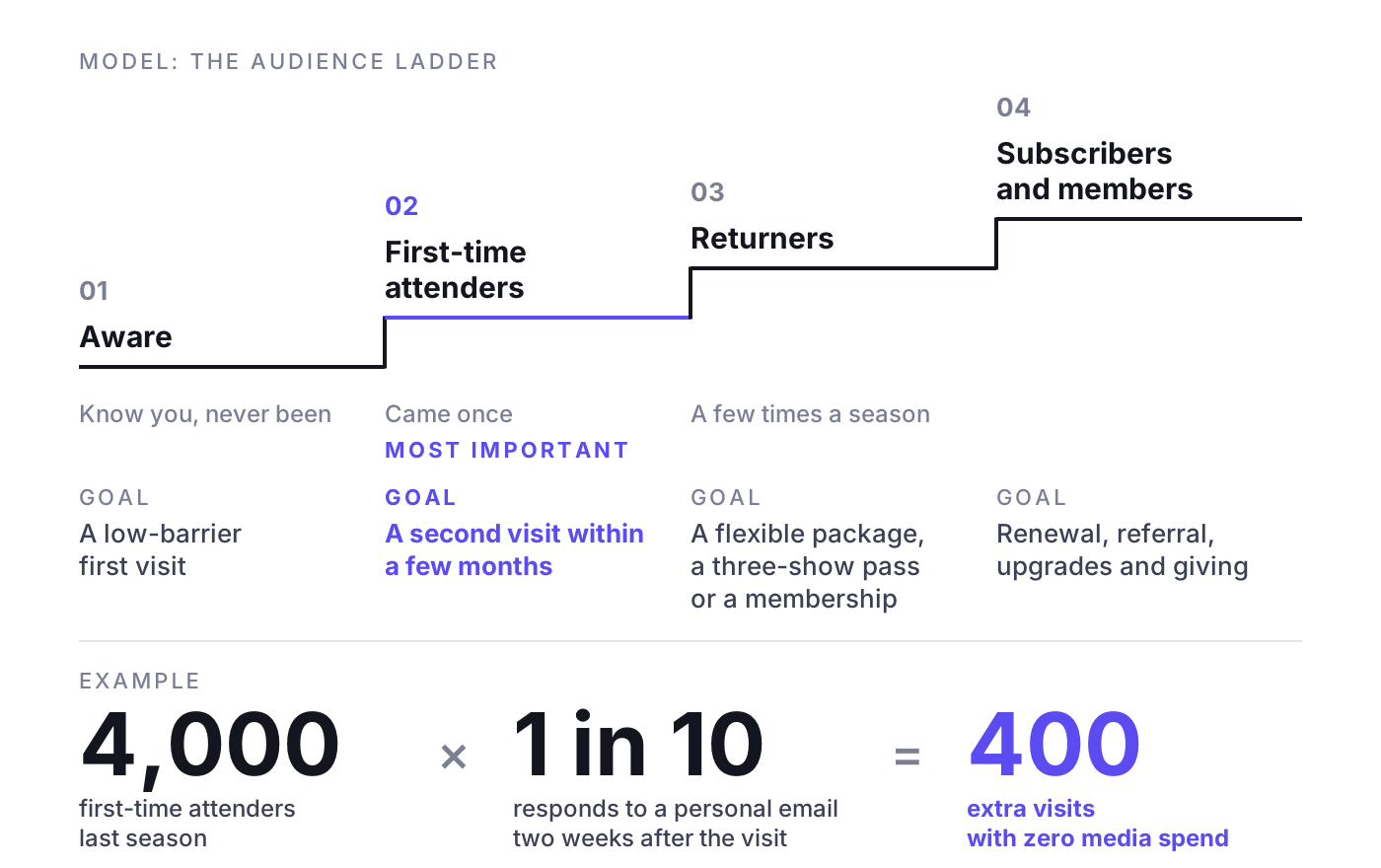
Audience development means deliberately reaching new groups and deepening the relationship with the people who already come. A simple model helps: the audience ladder. Every rung needs its own message and a clear next step.
- Aware: they know you but have never been. The goal is a low-barrier first visit, such as a family concert, a backstage tour, a late-night format or a production built on a familiar title.
- First-time attenders: they came once. The goal is a second visit within a few months. This is the most important rung and the one most often neglected.
- Returners: they come a few times a season. The goal is a flexible package, a three-show pass or a membership.
- Subscribers and members: the goal is renewal, referral, upgrades and giving.
Example: a venue had 4,000 first-time attenders last season, and only a few came back. Instead of buying more reach, it now sends every first-timer a personal email two weeks after their visit with two relevant recommendations and a time-limited offer for a second visit. If just one in ten responds, that is 400 extra visits with zero media spend.
Winning subscribers without bending the subscription
The classic fixed subscription (same seat, same weekday) no longer fits everyone's life. To grow subscribers, add flexible formats alongside it: choose-your-own packages of three or four performances, under-30 passes, credit-based vouchers or memberships with priority booking. Promote these specifically to returners: people who have already booked two or three times this season. They are closest to subscribing.
Use your own audience data: past bookers, subscribers, newsletter
Cultural institutions sit on something many commercial promoters lack: years of booking data, a subscriber base and a newsletter people actually read. Before you pay for new reach, make full use of this data, within the consent you have collected.
Segments you can build today
- Bookers by art form: drama, opera, orchestral, dance, family and youth.
- Bookers by weekday and time: someone who came on a Tuesday is your best prospect for the next weak Tuesday.
- First-time attenders in the last twelve months with no second booking.
- Subscribers with a renewal coming up, and subscribers who often exchange or skip performances.
- Former regulars who have not booked for a full season.
- Newsletter subscribers who have never bought a ticket.
What to do with them
Write a short, dedicated email per segment instead of relying on the newsletter that lists the whole season. The newsletter informs; the segment email sells. Use the same segments (with consent) as audiences in your ad accounts: exclude them when you are looking for new people, and target them when you want repeat bookings. Then make sure bookings from your ticketing system are matched back to campaigns, so you can see later which email and which ad actually sold which seats.
Season versus single show: theatre marketing in two beats
Good theatre marketing runs in two beats with different goals and messages. Mix them up and you end up promoting the whole season evenly while missing the dates that need help.
Beat 1: season marketing
The job here is to make the programme known, sell subscriptions and build the institution as a brand. A typical sequence: season announcement in spring, priority booking for subscribers, subscription campaign, then general on-sale. The message is the house and its programme: what will you experience this season, and why is a package worth it?
Beat 2: single-show marketing
The job here is to fill the performances that are behind plan. You need a weekly view: for each date, seats sold, capacity and sales pace against similar dates last season. That gives you a list of the dates with the biggest gap, and that is where segment emails, ads and partner offers go.
Example: a production has twelve performances. Eight are on plan; four midweek evenings are well behind. Instead of promoting the whole run, ads and emails go only to those four dates, with messages that fit the evening (early curtain after work, pre-show talk, group offer). For planning long runs, see theatre marketing for long-running shows. To see why midweek dates decide your margin, read mid-week dates in multi-date runs.
Promoting cultural events: channels and creative
Digital channels that work for the arts
- Email: the strongest channel for your core audience. Segmented, short, with one clear link to the date.
- Website and season calendar: many bookings start on your own site. Count the clicks from the calendar to seat selection, and buy a ticket yourself on a phone.
- Google Search: people search for the title, the composer, your venue or "theatre tonight" in their city. Ads on those terms catch people close to purchase and are often inexpensive in the arts.
- Meta (Facebook and Instagram): good for local reach and for audiences built from your own data. Facebook tends to reach the older audience, Instagram the younger one.
- TikTok and Reels: for younger audiences, as long as you show real access: rehearsal, make-up, set changes, musicians just before they walk on.
- YouTube: trailers and excerpts for opera, music and dance, where sound and movement persuade better than copy.
Posters, local press and classical radio still matter for the older audience. Let your booking data, not habit, decide how much budget stays there.
Creative that respects the art
Many institutions worry that advertising turns art into a product. In practice, arts creative works when it takes the work seriously and still answers one question: why should I come on this particular night?
- Show real moments from the production, not stock photos or just the abstract poster image.
- Translate the piece into an experience: not "a bold reimagining of the classic", but what the audience will see, feel and take home.
- Audience voices, review quotes with their source and short insights from the cast or director build trust.
- Spell out the practicalities: running time, language, surtitles, pre-show talks, suitability for first-timers.
More on this in creative for live entertainment.
Pricing and discounts without devaluing the work
Concessions are part of the mission for many institutions: students, young people, people on low incomes, disabled visitors. Those discounts are intentional and should be easy to find. The problem is blanket, publicly advertised last-minute discounts for weak performances. They teach audiences to wait and annoy the subscribers who paid full price.
Rules for discounts
- Tie offers to an audience (under 30, first-timers, groups) or to a specific date, never to "everything is cheaper".
- Use closed channels such as segment emails, partner codes or school mailing lists, not a discount on the public poster.
- Replace discounts with added value: a talk with the dramaturg, a drink at the interval, a rehearsal visit, the programme included.
- Keep the price structure simple. Three to four price levels per auditorium is a useful rule of thumb.
If you price dynamically, treat every price move as a demand signal as well (see dynamic pricing as a demand signal).
Partnerships: schools, tourism, employers
In arts marketing, partnerships often outperform paid reach, because they bring trust with them and open doors to groups you struggle to reach on your own.
- Schools and universities: school matinees, teaching resources, a teachers' mailing list, student allocations. This fills daytime and weekday dates and builds the audience of the future.
- Tourism: the city tourism board, hotels, visitor centres and tour operators. Visitors have free evenings and are looking for an experience. Multilingual information and surtitles become a selling point. Museums often add combined tickets with transport or other institutions.
- Employers: corporate packages, staff allocations, client evenings, sponsorships that include tickets. A large employer in your city is a sales channel of its own.
Give every partner its own code or link, so you can see which partnership filled seats and which was mostly effort for little return.
Measure by ticket sales and capacity, not reach
Reach and clicks say little about whether the house will be full. Measure arts marketing by what the institution needs:
- Capacity utilization per performance: seats occupied divided by capacity. Report paid single tickets, subscription seats and complimentaries separately, or the number will flatter you.
- Sales pace against plan: per date, weekly, compared with similar dates last season.
- Revenue per seat (are discounts eroding income?).
- Return rate: the share of first-time attenders who come back within a season.
- Renewals and new subscriptions: the long-term base of the house.
- Cost per incremental ticket: the seats a campaign sold that would otherwise have stayed empty.
Example: 540 occupied seats in a 720-seat auditorium is 75 percent capacity. What matters is looking at that number per performance, not just as a season average. An 80 percent average can hide sold-out weekends and half-empty Tuesdays. You'll find more metrics in ticket sales analytics and KPIs.
Arts marketing on a small budget: a 90-day plan
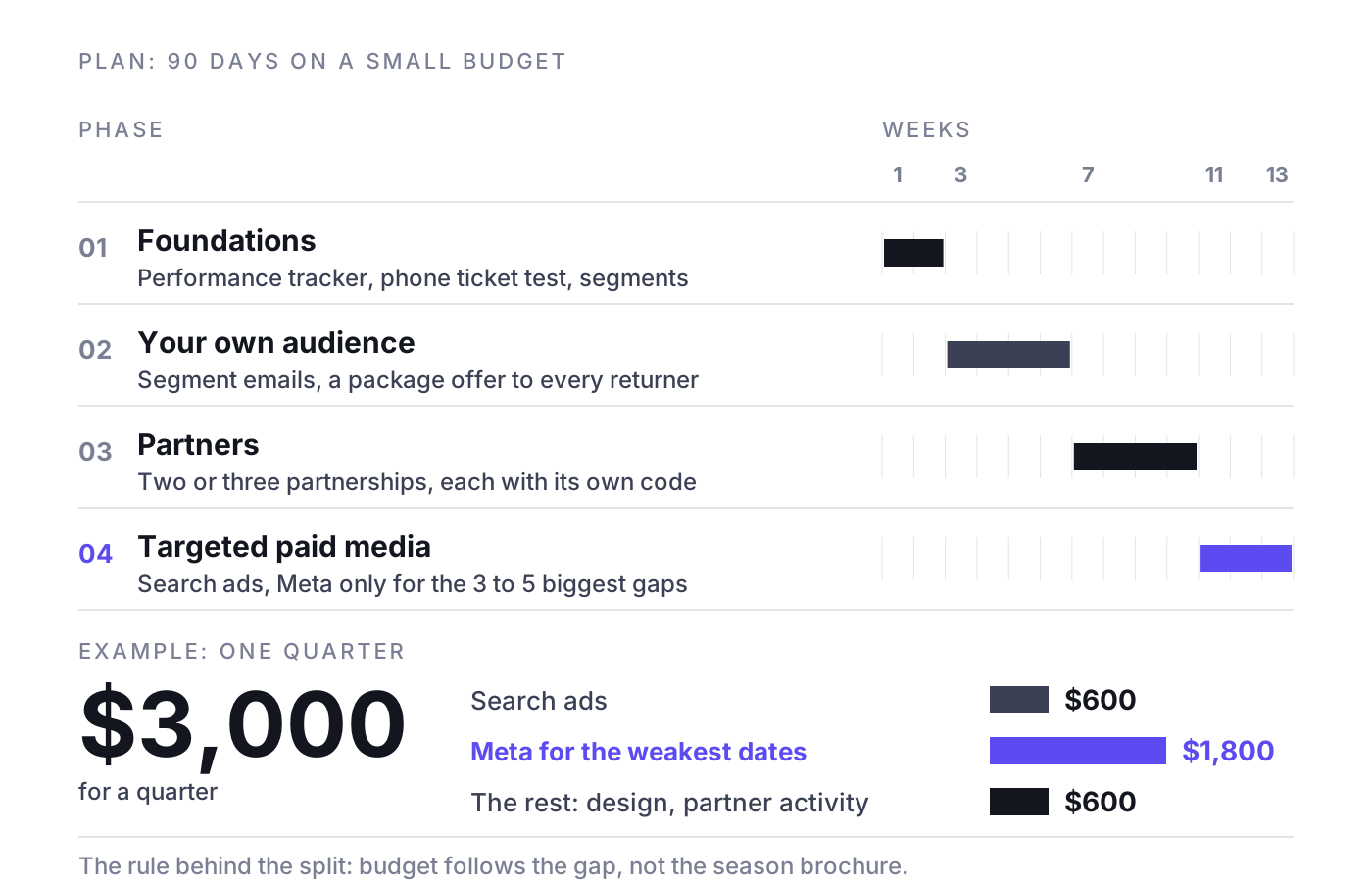
This plan puts a small budget and a small team where they make the most difference.
Weeks 1 to 2: foundations
- Build a performance tracker with capacity utilization and sales pace, and update it weekly.
- Buy a ticket yourself on a phone and fix the three biggest points of friction.
- Pull the segments above from your ticketing system.
Weeks 3 to 6: your own audience
- Segment emails to first-timers, returners and past bookers of your weak weekdays.
- A flexible package offer to every returner.
- Two to three social posts a week with real access to rehearsals and production.
Weeks 7 to 10: partners
- Start two or three partnerships with their own codes: a school, a hotel or visitor centre, an employer.
Weeks 11 to 13: targeted paid media
- Search ads on production titles and your venue name.
- Meta ads only for the three to five dates with the biggest gap.
- After every performance, check which channels sold seats and move budget accordingly.
Example: of a $3,000 quarterly budget, $600 goes to search ads, $1,800 to Meta campaigns for the weakest dates and the rest to design and partner activity. The exact split matters less than the rule behind it: budget follows the gap, not the season brochure. For more levers, see how to sell more tickets.
Where NYBA fits
With a handful of productions, this plan works in spreadsheets and ad accounts. It gets heavy with many performances, several venues and weekly budget decisions. NYBA is the Revenue OS for live entertainment. NYBA OS forecasts ticket demand per performance, runs campaigns on every channel that sells tickets (Meta, Google, TikTok and other paid channels), shifts budget toward the dates that need it and measures everything against verified ticket sales from the ticketing system, not platform-reported purchases. The platform has handled more than 75M tickets, 1,200+ events per year and 100+ promoters, including Live Nation, Cirque du Soleil and BBC Earth, with an expert layer on top of the software.
Frequently asked questions
What is arts marketing?
Arts marketing is the marketing of cultural programmes such as theatre, opera, music, dance and exhibitions. It aims to find the right audience for an artistic programme and build a lasting relationship with it, without bending the programme to demand.
How do theatres attract younger audiences?
With low-barrier formats, real behind-the-scenes content, under-30 offers and school and university partnerships. The second visit is what counts: follow up with first-timers shortly after the performance.
How can arts organizations grow subscriptions?
Offer flexible formats such as choose-your-own packages or memberships alongside the fixed subscription, and promote them to people who have already booked several times this season. Those returners are closest to subscribing.
What is the most important metric in arts marketing?
Capacity utilization per performance, split into single tickets, subscription seats and complimentaries, together with sales pace against plan. Reach and clicks are only steps along the way.
How much budget does arts marketing need?
There is no universal number. Use the free levers first (email, website, partners) and spend paid media on the dates with the biggest gap. Keep spending only while an extra seat costs less than it brings in.
If you want to see which performances in your season realistically need help and which spend actually fills seats, book a demo. One production, clean numbers, then you decide.
Related reading: Theatre marketing for long-running shows, Mid-week dates in multi-date runs, Ticket sales analytics and KPIs, Creative for live entertainment

Was würde 3x mehr
Umsatz für dich bedeuten?
Finde es heraus:
