


How to Sell More Tickets to Your Event: A Promoter's Playbook
A practical playbook for promoters who want to sell more tickets: read demand from comparables, build price tiers, time presales, target past buyers, fix checkout friction, split budget per show and measure the tickets your spend actually adds.


If you want to sell more tickets, adding budget is rarely the first lever to pull. Shows that underperform were usually priced, timed or targeted badly long before the first ad went live. Shows that sell out usually got a few unglamorous things right: an honest read of demand, a sensible price ladder, the warmest buyers first and a clean checkout. This playbook sets out a ticket sales strategy that works through those levers in the order you should pull them.
One note before we start: this guide is for organizers, promoters, venues and tour producers selling their own inventory. If you were looking for how to resell tickets you bought as a fan on Ticketmaster or StubHub, this is not the article for you. And if your show is already behind and you need a rescue plan, go straight to what to do when ticket sales are low. What follows is the proactive version: the plan you run before a show gets into trouble.
Key takeaways
- To sell more tickets, get demand reading, pricing, audience order and checkout right before adding budget; more ads only make a leaky funnel more expensive.
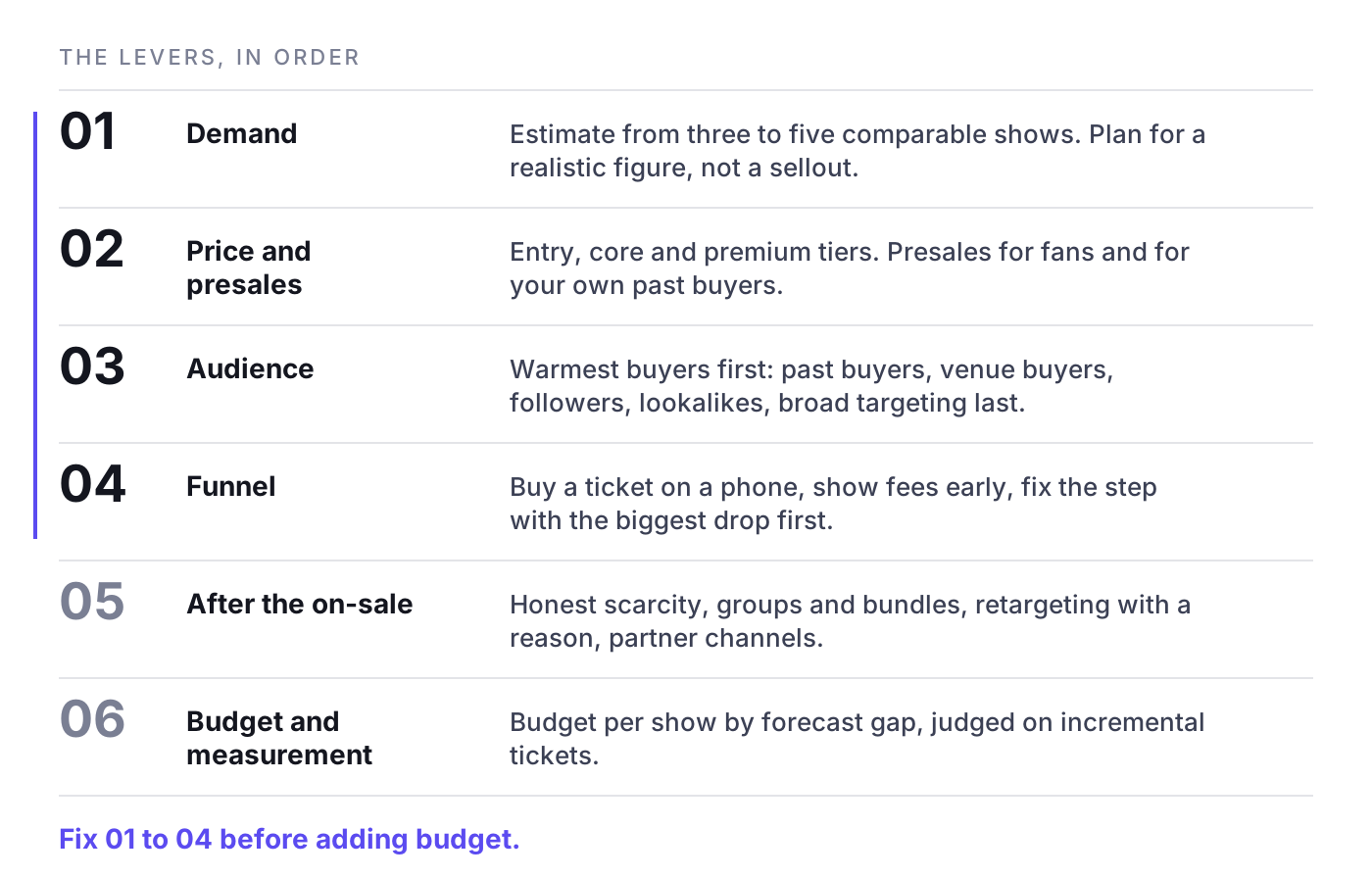
- Estimate demand from three to five comparable shows and plan for a realistic figure, not a sellout.
- Build a simple price ladder with entry, core and premium tiers, and run presales for fans and for your own past buyers.
- Buy a ticket to your own show on a phone, show fees early and fix the funnel step with the biggest drop-off first.
- Allocate budget per show by forecast gap, and judge spend on incremental tickets from your ticketing data, not platform-reported purchases.
Start with demand: how many tickets can this show realistically sell?
Every decision downstream (capacity, price, budget, number of dates) depends on a demand estimate. Write a number down before you announce, and write down why.
Use comparables, not hope
Pull three to five comparable shows: the same or a similar act, a similar genre, the same city or one of similar size, similar capacity and season. For each one, note tickets sold one week after announce, at the midpoint and at doors, plus the average ticket price. You are looking for the shape of a curve, not a single number.
- The last time this act played this market: how many tickets, at what price, how far in advance?
- The venue's own history for this genre, weekday and time of year.
Example: three comparable shows in a 2,000-capacity room sold between 1,100 and 1,500 tickets. Planning for a sellout and budgeting as if it were certain is a bet, not a plan. Plan for around 1,300 and treat everything above that as upside you have to earn.
Read early demand signals
Before tickets go on sale you already have signals: presale registrations, waitlist sign-ups, opens and clicks on the announce email, saves and shares on announce posts, and search interest for the act in your city. Compared against the same signals from past shows, they tell you whether you are tracking above or below your comparables. Once the show is on sale, the first three days are the strongest signal you will get. How to read that curve is covered in the on-sale curve and the first 72 hours.
Price architecture, on-sale timing and presales
Pricing is a marketing lever, not just a finance decision. A good price ladder gives every buyer a reason to buy now and leaves you room to respond to demand later.
Build tiers that each have a job
- Entry tier: a limited allocation at the lowest price that creates urgency at on-sale. When it is gone, say so publicly.
- Core tier: where most of your volume should land. Price it against your comparables, not against what you wish the show were worth.
- Premium: best seats, early entry, a merch bundle or a meet-and-greet where the act allows it. A small allocation that lifts average revenue per ticket.
- Groups and bundles: covered below, but plan the allocation now.
Keep the choice simple enough that someone on a phone can understand it in five seconds. Three or four price points per section is a reasonable rule of thumb. If you price dynamically, treat each price move as a demand signal as well as a revenue decision.
Choose an on-sale window people can act on
Announce and on-sale timing should give fans time to prepare without letting momentum fade. A common pattern is announce, presale a few days later, general on-sale shortly after that. Avoid on-sales that collide with a bigger act in the same market or with holiday weekends. A weekday morning on-sale means your team is at their desks to watch the numbers and fix problems as they happen.
Use presales to reward fans and to learn
Presales are not only about selling early. They reward your most loyal audience, bring revenue forward and give you real purchase data before the general on-sale. Where possible, run two layers: an artist or fan club presale, and a promoter or venue presale for your own past buyers. Distribute codes cleanly (more on that in the funnel section) and compare presale conversion by source to learn which lists actually buy.
Audience and creative: sell to the people most likely to buy first
The cheapest ticket you will ever sell goes to someone who has bought from you before. Work outwards from your warmest audience, in this order:
- Past buyers of the same act, genre or venue. Your ticketing data is the best audience you own. Segment by artist, genre, venue and recency.
- Venue buyers. Regular attendees of a venue convert well on shows that fit its profile, especially in theatres and mid-size rooms.
- Engaged followers and subscribers of the act, the venue and your promoter brand.
- Lookalikes built from actual buyers, not from page fans or website visitors. Seed quality matters more than seed size.
- Broad and interest targeting last, once your creative has proven itself with warmer audiences.
Set the geographic radius from data
Check where past buyers for comparable shows actually came from. A club show might draw mostly from within 30 to 50 km. An arena headliner or a festival draws people from hours away and needs travel and accommodation messaging. Spending outside the realistic radius wastes budget; spending only in the city centre misses nearby towns that often buy late.
Creative that shows the night, not the poster
Fans buy the experience. Use live footage, crowd shots, a clear date and city, and one reason to act now. Test a few genuinely different concepts, and refresh creative when frequency climbs and results flatten. For formats and hooks that work in live entertainment, see creative for live entertainment.
Fix the ticket funnel before you buy more traffic
If people tap through to your ticket page and too few complete a purchase, more ads only make the leak more expensive. Buy a ticket to your own show: on a phone, on mobile data, as a first-time buyer. Then check the following.
- Mobile ticket page: does it load fast? Are date, venue and price visible without scrolling? Is the buy button obvious?
- Fees shown late: if the price jumps at the last step, buyers drop out. Show the all-in price, or at least the fees, early. In many markets showing the total price upfront is also a legal requirement.
- Presale codes: is the code field where buyers expect it? Are codes case-sensitive? Does an invalid or expired code show a clear message and a route to the general on-sale?
- Forced account creation: registration before seat selection adds friction. Guest checkout or a later account step usually converts better.
- Payment and seats: offer digital wallets and local payment methods, and on small screens a clear "best available" option often beats a complex seat map.
Track the funnel step by step: ticket page view, ticket selection, checkout start, purchase. The step with the biggest drop is your first fix.
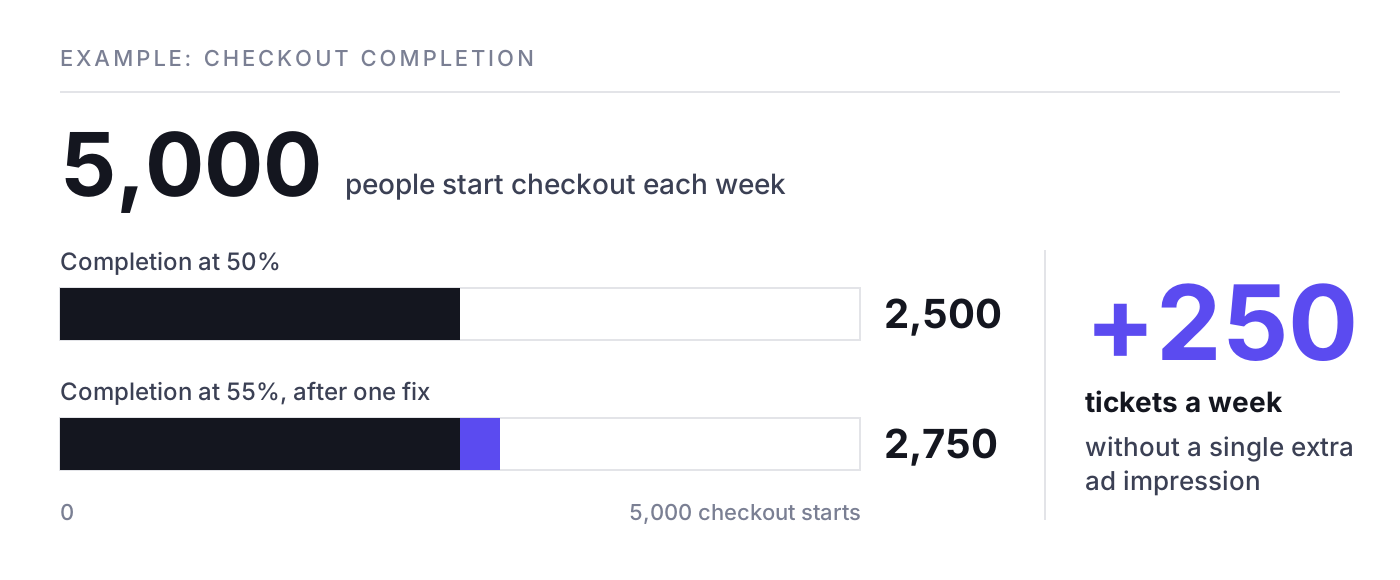
Example: 5,000 people a week start checkout and 2,500 complete. A change that lifts completion from 50% to 55% adds 250 tickets a week without a single extra ad impression.
How to increase ticket sales after the on-sale
Most campaigns are loud at announce and loud in the final two weeks, with a long quiet middle. These levers keep the middle moving.
Honest scarcity and social proof
Real scarcity sells: "Tier 1 sold out", "Last 200 standing tickets", "Friday almost gone, Saturday added". Fake scarcity ("only a few left" for three months) teaches your audience to ignore you and damages trust for the next show. For social proof, share real milestones, crowd footage from earlier tour dates and genuine fan reactions.
Groups and bundles
Groups of four or more, ticket plus hotel for destination events, ticket plus merch, multi-day passes and family bundles raise order value and reach people who would not buy a single ticket. Offer a perk or a modest discount rather than a deep cut.
Retargeting with a reason
Retarget ticket page visitors, checkout abandoners and people who watched most of a video. Cap frequency, exclude buyers quickly (ideally using your ticketing data, not just the pixel) and change the message: give people a new reason to buy instead of the same ad again. High-demand on-sales are a special case; see retargeting queue traffic.
Partner channels
Think local media, radio, venue newsletters, the ticketing platform's own marketing, sponsors, the artist's channels, hotels and tourism boards. Give each partner a unique tracking link or code so you can see which ones sell tickets rather than just impressions.
How to sell concert tickets across a tour: budget per show and incremental tickets
Allocate budget per show, not per tour
A tour budget split evenly across dates wastes money on shows that would sell out anyway and starves the ones that need help. Set a target per show from your demand estimate, track pace against it every week, and move budget towards shows that are behind but still respond to spend. Shows far ahead of target only need maintenance spend. Shows far behind that do not respond to spend need a different fix (price, date, capacity, offer), not more ads. Mid-week dates in multi-date runs often need more support per ticket than weekends.
Example: a 10-date tour with a total paid media budget of 50,000. Instead of 5,000 per show, hold back 30% as a reserve. Allocate the rest by forecast gap: a show forecast at 95% of capacity gets a small maintenance budget, a show forecast at 60% gets considerably more. Each week, release part of the reserve to the shows where recent spend moved the most tickets.
Measure incremental tickets, not platform-reported purchases
Meta, Google and TikTok will each claim credit for many of the same tickets. Add up their reported purchases and you often get more tickets than you actually sold. The question that matters is how many tickets you would not have sold without that spend.
- Reconcile channel results against verified ticket sales from your ticketing system, by show and by day.
- Run holdout or geo tests: pause or reduce spend for one comparable market or segment and compare.
- Track marginal cost per incremental ticket, not average cost per purchase. The first chunk of budget on a show is usually far more efficient than the last.
For a step-by-step method, see incrementality testing for ticket sales.
Sell more tickets this week: quick wins and what not to do
Quick wins this week
- Buy a ticket to your own show on a phone and fix the three worst friction points.
- Show fees early on the ticket page, or at the very least before the final step.
- Email past buyers of the same act or genre who have not bought yet, with a dedicated message rather than a general newsletter.
- Exclude existing buyers from prospecting and retargeting.
- Build a lookalike audience from actual buyers in your ticketing data.
- Announce one real milestone: a tier sold out, a date added, a section nearly gone.
- Set a weekly pace target per show and compare actual sales against it.
- Replace any creative that has run for weeks with rising frequency and falling results.
What not to do
- Do not discount publicly early on. It punishes people who already bought and trains your audience to wait.
- Do not invent scarcity.
- Do not split budget evenly across dates.
- Do not judge channels on platform-reported purchases alone.
- Do not keep adding budget to a show that does not respond. The problem is probably price, date or offer.
- Do not hide fees until the last step.
- Do not add dates before you know whether the existing ones will sell.
Where NYBA fits
Everything above can be done by hand with spreadsheets, ad managers and ticketing exports, until you run many shows at once and budget decisions have to be made daily. NYBA is the Revenue OS for live entertainment. NYBA OS forecasts ticket demand per show, runs campaigns on every channel that sells tickets (Meta, Google, TikTok and other paid channels), shifts budget towards the shows that need it and measures everything against verified ticket sales from the ticketing system instead of platform-reported purchases. It has been used for 75M+ tickets across 1,200+ events per year and 100+ promoters, including Live Nation, Cirque du Soleil and BBC Earth, with an expert layer on top of the platform.
Frequently asked questions
What is the fastest way to sell more tickets?
Start with the people who already know you: email and target past buyers of the same act, genre or venue, and fix the biggest drop-off in your ticket funnel. Both cost little and work within days.
When should I start promoting an event?
At announce, with a presale registration or waitlist so you can measure demand before tickets go on sale. How far ahead depends on the format: a club show needs weeks, an arena tour or festival needs months.
Should I lower prices if sales are slow?
Rarely as a first move, and never publicly early on. Check audience, radius, funnel and creative first. If price really is the problem, use targeted offers (groups, bundles, a specific segment) that do not punish people who already bought. For a full rescue plan, see the guide on low ticket sales.
How much should I spend on ads per ticket?
There is no universal number. Work back from what a ticket contributes to your margin, then track the marginal cost per incremental ticket. Keep spending on a show while that cost stays below what an extra ticket is worth to you, and stop when it does not.
Is this guide about reselling tickets?
No. This playbook is for organizers and promoters selling their own inventory.
If you want to see what your next show could realistically sell and which spend actually moves tickets, book a demo. One event, clean numbers, then you decide.
Related reading: demand forecasting for live events, dynamic pricing as a demand signal, mid-week dates in multi-date runs, marginal cost per incremental ticket

Was würde 3x mehr
Umsatz für dich bedeuten?
Finde es heraus:
