


ChatGPT Ads for Events: How Promoters Sell More Tickets in ChatGPT
How promoters use ChatGPT ads to sell more tickets: where the ads run in Europe, context hints instead of keywords, OpenAI Pixel and Conversions API, how to get shows into ChatGPT answers organically, and how to test campaigns against real ticket sales.


ChatGPT ads for events are sponsored placements that OpenAI shows below ChatGPT's answers when a conversation matches what a promoter sells: a concert, a festival weekend, a theatre run, a family show or an attraction. Someone asks ChatGPT what to do in Hamburg over the Easter holidays with two kids, gets an answer, and underneath it sees a clearly labelled card for a family show in the city that week. The ad reaches people while they plan, not while they scroll, and that is why it can sell tickets that no feed would have sold.
ChatGPT ads started in the US in February 2026 and have been running in the UK, Germany, Austria and most of Europe since August 2026. For promoters that raises two practical questions: is it worth paying for ChatGPT ads to sell more tickets, and what do you need to do so that ChatGPT recommends your show when nobody pays at all? This guide answers both, separates what OpenAI has confirmed from what is still missing as of October 2026, and shows how to test the channel against real ticket sales.
Key takeaways
- ChatGPT ads are live in the US, the UK, Canada, Australia, Germany, Austria and most of Europe, shown only to logged-in adults on the Free and Go plans.
- In the EEA and Switzerland ads are not personalized yet: they match the current conversation, general location and language, so custom audiences are not an option there.
- There is one format: a chat card below the answer with a title of up to 50 characters, up to 100 characters of copy, a square image and one landing page.
- Organic visibility comes first: allow OAI-SearchBot, publish one clear page per show with schema.org Event markup, a direct ticket link and real FAQ answers.
- Run the first campaign as a fixed-budget test and judge it by verified orders in your ticketing system, not by clicks or pixel conversions.
What ChatGPT ads are, and what is confirmed in October 2026
Ads in ChatGPT appear below an answer when the conversation matches an advertiser's offer. They are labelled as sponsored, and OpenAI states that advertising does not influence what ChatGPT says: you cannot buy your way into the answer, only into the slot underneath it.
The rollout so far
- 16 January 2026: OpenAI publishes its advertising principles, including no ads for users under 18 and none next to health, mental health or politics.
- 9 February 2026: the test starts in the US for logged-in adults on the Free and Go plans.
- 26 March 2026: expansion to Canada, Australia and New Zealand.
- 5 May 2026: CPC bidding and a self-serve Ads Manager beta are added to the original CPM buying.
- 11 August 2026: launch in the UK, Mexico, Brazil, Japan and South Korea, according to OpenAI's announcement and its updates.
- 18 August 2026: OpenAI announces ChatGPT ads in 31 European markets, naming Germany and Austria among them. Ads started the following week, with self-serve access through Ads Manager by 31 August.
Confirmed
- Who sees ads: logged-in adults on Free and Go. Plus, Pro, Business, Enterprise and Edu accounts are ad-free, as are temporary chats and, during the test, the ChatGPT Atlas browser. Accounts identified as under 18 see no ads.
- Placement: one or more ad units below a response when there is a relevant match.
- Buying: self-serve in Ads Manager, or through the OpenAI Ads team and its agency and technology partners. The paying legal entity must be based in an available country; Germany, Austria, Switzerland and the UK are listed.
- Bidding: Views (CPM), Clicks (CPC) or Conversions (optimised for conversions, billed per click).
- Targeting: country and sub-national location, platform (apps and mobile or desktop web), context hints and, outside Europe, custom audiences.
- Measurement: OpenAI Pixel, Conversions API and third-party integrations. Advertisers only get aggregated reporting, never chats or personal data.
Not available or not confirmed
- Personalized ads in the EEA and Switzerland: OpenAI's help center says they are "not initially available". There is no public date.
- Demographic or interest targeting and lookalikes: none documented.
- Keywords: context hints describe relevant topics but are explicitly not exact-match keywords and do not guarantee delivery.
- Video, carousel or event feeds: the only creative is a static chat card. Product feeds and hotel feeds exist, but there is no event or ticket feed.
- Price list: OpenAI publishes no rate card. Its help center suggests starting CPC campaigns with a maximum bid of 3 to 5 USD per click, and the minimum daily budget is 25 USD in the US and 15 EUR in euro markets.
OpenAI's ad policies matter for event marketing too. Alcohol and tobacco ads are currently disallowed, so a beer festival or a creative built around a drinks sponsor will not run. Gambling, political messages and adult-themed events are also excluded. Ticketing and resale are not mentioned specifically, so the general rules on accurate claims and honest landing pages apply.

Why ChatGPT ads can work for ticket sales, and where they will not
People use ChatGPT to plan, not to scroll. Typical questions sound like "what can we do in Vienna this weekend with two kids", "which musicals are on in Hamburg in December" or "is this show suitable for a ten-year-old". That intent sits between search and social: more open than a search for your show's name, more deliberate than a feed. In that sense ChatGPT advertising behaves more like Google Ads for events than like Meta or TikTok.
The best fits are events people plan around a trip, a date or a gift:
- Long-running theatre and musicals, exhibitions and immersive experiences with daily availability.
- Family entertainment, where parents ask detailed questions before booking.
- City-break and tourism-driven shows, where visitors plan from home.
- Festivals and premium packages that need explaining.
The honest limits: ChatGPT does not create demand the way video on social does, there is no retargeting in Europe for now, the format is one static card and nobody outside OpenAI knows how much relevant inventory exists per city. A headliner on-sale that sells out in an hour does not need ChatGPT ads, and a 300-capacity club night will rarely match enough conversations to spend a budget.
Being found in ChatGPT answers without paying
The ad sits below the answer; the answer itself is organic and for most promoters the bigger lever. ChatGPT SEO, or generative engine optimization, is for events mostly about making your facts easy to find, read and trust.
Let OpenAI's crawlers in
- OAI-SearchBot surfaces websites in ChatGPT search. OpenAI states that sites opted out of it will not be shown in ChatGPT search answers. Allow it in robots.txt.
- GPTBot is the separate crawler for model training. You can block it without affecting search visibility.
- OAI-AdsBot checks pages submitted as ad landing pages. If your bot protection, CDN or queue system blocks it, your ads can fail review.
One clear page per show
- One URL per show, ideally per date or city for runs and tours, with show name, city, venue and date in the page title.
- The facts in plain HTML text, not only inside a poster image: dates, start times, running time, venue address, price range, age guidance, accessibility and current availability.
- A direct link to the official ticket shop, labelled as the official source. This also reduces secondary market leakage when assistants look for where to buy.
schema.org Event markup
OpenAI does not publish which structured data it reads, so treat event schema markup as good practice rather than a guaranteed ranking factor. It is the standard way to make event facts machine-readable. Use JSON-LD with these properties:
- @type: Event or a subtype such as MusicEvent, TheaterEvent, ComedyEvent, ExhibitionEvent or Festival.
- name, description, image and startDate and endDate with time zone.
- eventStatus: EventScheduled, EventPostponed, EventRescheduled or EventCancelled.
- location: a Place with name and PostalAddress.
- performer and organizer.
- offers: url to the ticket page, price, priceCurrency, availability (InStock, LimitedAvailability, SoldOut) and validFrom for the on-sale time.
For multi-date runs, mark up one Event per performance and keep availability in sync with the ticketing system.
FAQ content that answers real questions
Write the answers your box office gives every day, in short direct sentences: running time and interval, age guidance, parking, public transport, step-free access, door times, best seats. These are exactly the questions people ask ChatGPT before they buy.
Consistency and a monthly check
Spell show name, venue and dates identically everywhere. Ticketing companies such as Ticketmaster and StubHub have launched apps inside ChatGPT for event discovery, so incomplete listings there now cost visibility too. Once a month, ask ChatGPT the 20 questions your buyers ask, in every language you sell in, and note whether your show appears and which link is cited.
Account and tracking setup for ChatGPT ads
Ads Manager
- Sign up at ads.openai.com as the paying legal entity, set up billing and create a pixel in the conversions tab.
OpenAI Pixel and Conversions API
The OpenAI measurement documentation describes a browser pixel and a server-side Conversions API. Map the ticket journey to the standard events:
- Event page view: contents_viewed
- Tickets selected: items_added
- Checkout started: checkout_started
- Order completed: order_created, with amount in minor units (98.00 EUR is 9800) and currency
- Presale or waitlist sign-up: registration_completed or lead_created
Send order_created from the ticketing system through the Conversions API as well, and reuse the same value as the pixel event_id and the API id so the order is counted once. Same principle as the Meta Conversions API. Server events must be sent within seven days. The pixel stores OpenAI's click identifier (oppref) from the landing URL in a first-party cookie for 30 days. The documented default attribution is a 30-day click window and a 1-day view window, which is long for an event with a fixed date, so read it with care.
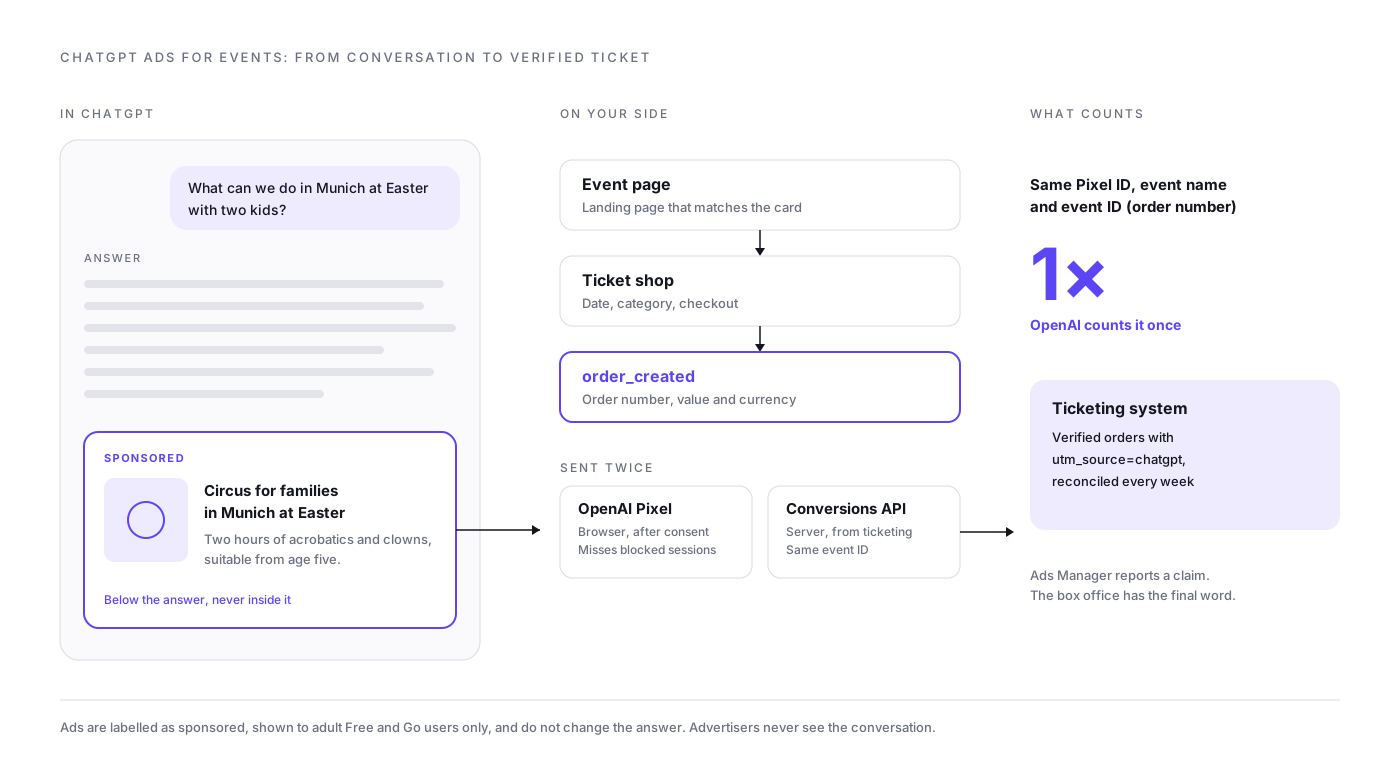
When the checkout runs on a third-party ticketing domain
- Send ad clicks to your own event page, where the pixel runs, not straight into the shop.
- Track the click to the ticket shop as checkout_started or a custom event. Custom events cannot be used as an optimisation goal, so do not rely on them for conversion bidding.
- Pass UTM parameters to the shop if it accepts them, and use the ticketing system's sales reports by source as the reference.
- If your ticketing provider exports orders, send them server side with hashed identifiers, given a legal basis.
UTMs and naming
Ads Manager supports URL parameter templates. A simple convention: utm_source=chatgpt, utm_medium=paid_ai, utm_campaign=2026_hamburg_showname_midrun. Name campaigns the same way, for example "CGPT | Showname | Hamburg | Clicks".
Consent
For EU traffic, load the pixel only after consent through your consent banner. The pixel supports this: set consent to false before initialising and to true once the visitor agrees. Server-side events also need a legal basis, so agree the setup with your data protection officer before launch.
Campaign structure along the on-sale cycle
ChatGPT ads match conversations, not audience segments, so structure ad groups by intent theme rather than by audience temperature. A practical setup per show:
- Campaign: CGPT | Showname | Hamburg | Clicks
- Ad group "Things to do": weekend plans, rainy day ideas, evening out in Hamburg
- Ad group "Family": shows for children, family weekend, school holidays
- Ad group "Gifts": experience gifts, Christmas, birthdays
- Ad group "Show questions": the show, the artist, the venue, how to get tickets
How the phases translate:
- Announce: demand is created on social and in PR. At most a small Clicks campaign on show and artist questions, driving presale registrations.
- Presale: optimise for registration_completed only if you have enough sign-ups; otherwise stay on Clicks.
- General on-sale, first 72 hours: make sure the "show questions" ad group is live with the official ticket link, but let search and social carry the volume. The first 72 hours of the on-sale curve decide more than this channel can.
- Mid-run: where ChatGPT ads fit best. Planning questions about weekends, gifts and family trips arrive every week, independent of your announcements.
- Last call: narrow location to the city and surrounding region, switch copy to "final dates" and "seats left for Saturday", and pause dates the moment they sell out.
- Multi-date runs and tours: one campaign per city with sub-national targeting and a landing page per city or date, and budget shifted toward weaker dates.
Targeting: context hints, location and audiences
Context hints
Context hints describe the conversations, topics or needs where your offer is relevant. You can add up to 2,000 per ad group, but quality beats volume. Write them as short descriptions in the language your buyers use:
- Family musical in Hamburg for children aged 6 and up
- Things to do in Hamburg on a weekend in December
- Experience gift ideas for theatre lovers in northern Germany
- Day trip to Hamburg with teenagers
Hints are not keywords and not targeting rules. A user does not have to type your words; the need behind the question is what counts. Three questions shape every hint: what is the event, who does it suit, and when is it the right choice. Examples by event type:
- Family show: Family circus show in Munich during the Easter holidays, suitable for children from five years
- Festival: Three-day electronic music festival on the coast of Spain in June, with camping and weekend passes
- Musical: Long-running musical in Hamburg for couples planning a weekend city break
- Attraction: Indoor activity for families on a rainy weekend, around 90 minutes, open daily
What to avoid: delivery instructions such as "show this only to people in Cologne" (use the location settings and describe the event instead), fan targeting such as "fans of the headliner", bare keyword lists, and stale details. Update hints whenever dates, prices, availability or line-ups change.
Location
Location targeting works by country, region, city and postal code. Think about where people plan, not only where the venue is: a show in Vienna that relies on visitors from Germany should target German source regions too.
Custom audiences outside Europe
In markets with personalization, custom audiences built from emails or phone numbers need at least 25,000 matched users for inclusion; exclusion lists have no minimum. Exclude buyers of the same show and use past buyers for new on-sales. For campaigns in the EEA or Switzerland, OpenAI advises against custom audiences while personalization is restricted.
Creative and ad specs for ChatGPT ads
Every ad is a chat card. Per OpenAI's documentation:
- Advertiser name and favicon come from your account.
- Title: 3 to 50 characters.
- Body: up to 100 characters.
- Image: JPEG, PNG or WebP, square, at least 640 x 640 pixels. Static only.
- Landing page: one HTTPS URL, reachable for OpenAI's crawlers.
- Every new or edited ad goes through review before delivery.
Write copy like a useful answer, not a slogan: what, where, when, for whom, from what price. Use an image that shows the experience at small size; a text-heavy poster does not read in a card. Example ad copy:
- Title: Family musical in Hamburg this December
Body: 2.5 hours with interval, ages 6+, seats from 49 EUR. Weekend matinees. - Title: Light art walk in Vienna, open daily
Body: 60 minutes, step-free route, time slots until 10 pm. Tickets from 24 EUR. - Title: Final weeks: seats left for Saturday
Body: Last performances on 21 and 22 March. Book on the official ticket page.
Budget and bidding for ChatGPT ads
What OpenAI states: you can bid on Views (CPM), Clicks (CPC) or Conversions. Strategies are a fixed maximum bid, Maximize Clicks or Maximize Conversions. Conversion-optimised campaigns are still billed per valid click. A daily budget is an average over seven days; on a single day the campaign may spend up to twice the daily amount.
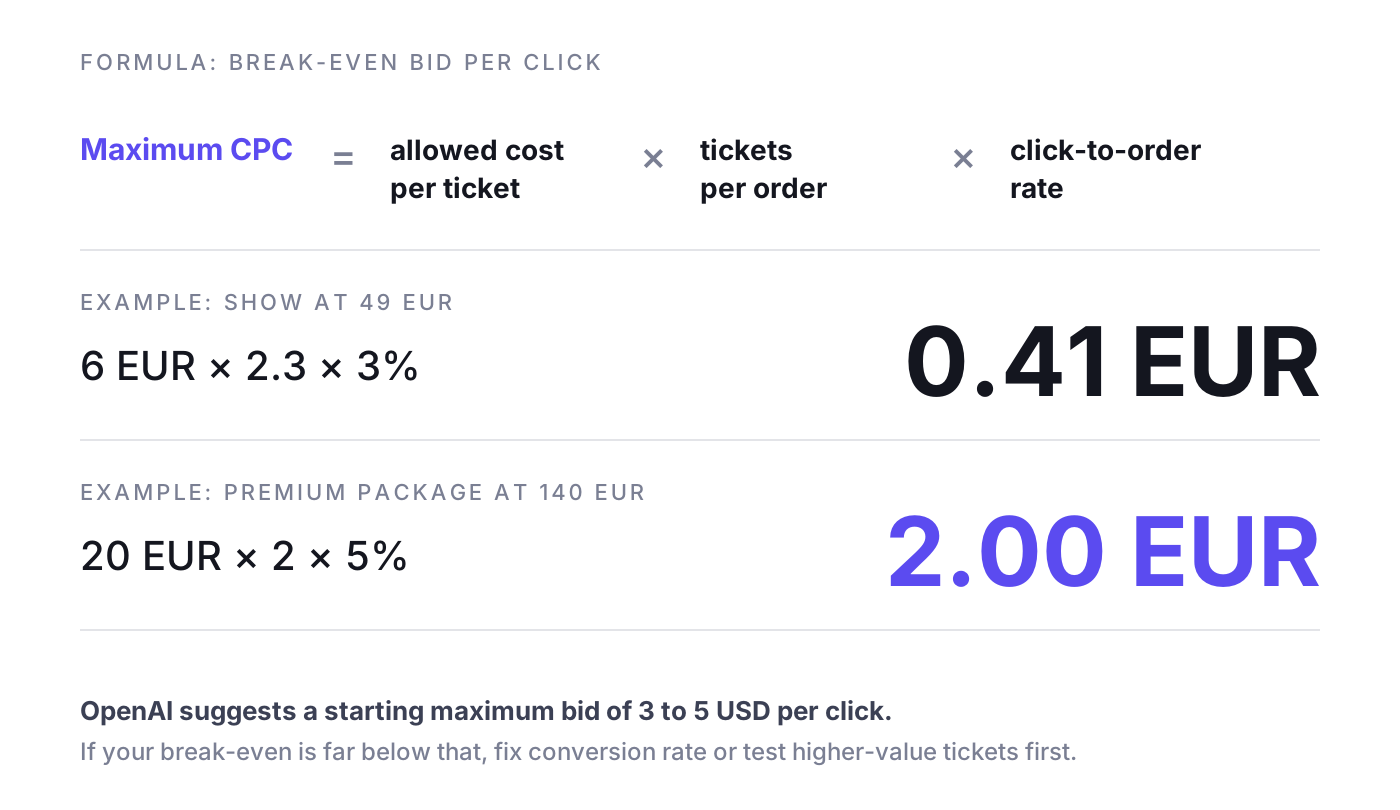
The useful question is not what a click costs but what a click is allowed to cost. The break-even formula:
Maximum CPC = allowed marketing cost per ticket x tickets per order x click-to-order rate
Example: a show with 2,000 tickets at 49 EUR. You allow 6 EUR of marketing cost per ticket, buyers take 2.3 tickets per order and 3 percent of clicks turn into an order. Maximum CPC = 6 x 2.3 x 0.03 = 0.41 EUR. That is far below the 3 to 5 USD starting bid OpenAI suggests, so at those numbers the channel only works if the click-to-order rate is much higher.
Example: a premium package at 140 EUR. You allow 20 EUR per ticket, 2 tickets per order and a 5 percent click-to-order rate. Maximum CPC = 20 x 2 x 0.05 = 2.00 EUR. Much closer, which is why higher-value tickets and well-converting landing pages are the natural place to test.
Example test budget for a mid-run show, four weeks, 1,400 EUR in total:
- Weeks 1 and 2: 50 EUR per day across three ad groups on Clicks with a fixed maximum bid.
- Weeks 3 and 4: the same 50 EUR per day, shifted to the ad group with the lowest cost per verified order.
- Stop rule: if cost per verified order is above twice your target after week 2, pause and fix landing page or context hints first.
As a rule of thumb, start on Clicks and only switch to Conversions once order_created events arrive reliably and in volume. To decide whether the money is better spent here or on another channel, compare the marginal cost per incremental ticket, not the average.
Measuring ChatGPT ads against real ticket sales
Conversions in Ads Manager are a claim, not a ticket count. A 30-day click window overlaps with every other channel, and people who ask ChatGPT how to get tickets for your show have often decided already.
- Weekly reconciliation: compare Ads Manager conversions with orders tagged utm_source=chatgpt in the ticketing system and with total sales for the show.
- The metrics that count: cost per verified order, verified revenue per euro spent and the share of first-time buyers.
- Holdouts: on a tour, run ChatGPT ads in some cities and not in comparable others, and compare each city against its forecast. For long runs, alternate on and off weeks.
The method is the same one you would use for any channel: see incrementality testing for ticket sales and marketing attribution for live events.
Common mistakes and a launch checklist
Common mistakes:
- Blocking OAI-SearchBot or OAI-AdsBot through bot protection without noticing.
- Key event facts that only exist in a poster image.
- Sending ad clicks straight into a ticket queue that the pixel cannot see.
- Planning EU campaigns around custom audiences or Meta-style interests that do not exist there.
- Pasting hundreds of brand keyword variants as context hints: they are not keywords.
- Reading platform conversions as ticket sales.
Launch checklist:
- robots.txt allows OAI-SearchBot; ad landing pages are reachable for OAI-AdsBot.
- One page per show or date with plain-text facts, FAQ and the official ticket link.
- schema.org Event markup with correct dates, status, offers and availability.
- Ads Manager account for the paying entity, billing set up, pixel created.
- Pixel loads after consent; order_created goes via pixel and Conversions API with a shared id.
- UTM template set; campaign per show and city, ad groups by intent theme.
- Written test budget, target cost per verified order and stop rule.
Where NYBA fits
All of this works by hand for one show. It gets hard with many shows across several channels, each with its own demand curve. NYBA OS is the Revenue OS for live entertainment: it forecasts ticket demand per show, runs campaigns on every channel that sells tickets (Meta, Google, TikTok and other paid channels), shifts budget toward the shows that need it and measures everything against verified ticket sales from the ticketing system, not platform-reported purchases. New channels such as ChatGPT ads are tested inside that same logic. The track record: 75M+ tickets, 1,200+ events per year and 100+ promoters, including Live Nation, Cirque du Soleil and BBC Earth. The NYBA team works as the expert layer on top of the platform.
Frequently asked questions
Does ChatGPT have ads now?
Yes. Since February 2026 in the US and since August 2026 in the UK and most of Europe, logged-in adults on the Free and Go plans can see ads below answers. Paid plans such as Plus and Pro are ad-free.
Are ChatGPT ads available in Germany, Austria and Switzerland?
Ads have been shown in Germany and Austria since late August 2026, and Ads Manager lists Germany, Austria and Switzerland as available for advertisers. In the EEA and Switzerland ads are not personalized for now.
How much do ChatGPT ads cost?
There is no public rate card. OpenAI suggests a starting maximum bid of 3 to 5 USD per click for CPC campaigns. The minimum daily budget is 25 USD in the US and 15 EUR in euro markets.
How do I get my event recommended by ChatGPT without ads?
Allow OAI-SearchBot, publish a clear page per show with plain-text facts, schema.org Event markup, an FAQ and the official ticket link, and keep those facts consistent across ticketing listings and venue calendars.
Can I target past ticket buyers with ChatGPT ads?
Outside Europe, yes: custom audiences need at least 25,000 matched users for inclusion, and exclusions have no minimum. For the EEA and Switzerland, OpenAI currently advises against custom audiences.
Can I advertise a festival with a drinks sponsor?
You can advertise the festival, but alcohol ads are currently disallowed, so keep the sponsor's drinks out of the creative and the landing page message.
If you want ChatGPT ads and every other paid channel judged against demand forecasts and verified ticket sales, book a demo. One event, clean numbers, then you decide.
Related reading: Meta ads for events, TikTok ads for events, Theatre marketing for long-running shows, The ticketing-first data layer


Was würde 3x mehr
Umsatz für dich bedeuten?
Finde es heraus:
